
Ahi, salmon or hamachi?
The three fish that carry Domo's menu, compared on texture, fat and flavor, plus what each one suits best raw, seared and in poke.
Ahi is firm and clean, salmon is rich and buttery, hamachi sits between them with a soft, faintly sweet finish. All three run through nearly everything on the fresh fish side of the menu, raw, seared and in poke, and the right one depends more on what you like than any hard rule.
The three, side by side
| Ahi (tuna) | Salmon | Hamachi (yellowtail) | |
|---|---|---|---|
| Texture | Firm, dense, a little meaty | Soft and silky | Tender, buttery |
| Fat | Lean | Higher fat, richer mouthfeel | Moderate, well marbled |
| Flavor | Clean, mild, slightly oceanic | Rich, a little sweet | Delicate, subtly nutty |
| Best raw | Nigiri and sashimi, holds its shape well | Nigiri and sashimi, melts in the mouth | Sashimi especially, very clean |
| Best seared (aburi) | Good, the torch adds a light char without overwhelming the lean flesh | Excellent, the fat renders and gets almost custardy at the edge | Good, a lighter smoke than salmon |
| Best in poke | The classic, and the base of most bowls on the menu | Great if you want a richer bite than ahi gives you | Less traditional, but adds a soft, mellow note next to ahi |
Ahi: the workhorse
Ahi is the backbone of the menu, and for good reason. It is lean, holds a clean cut, and carries other flavors (garlic, shoyu, spicy mayo, kabayaki) without disappearing under them. That is why it is the base of most poke bowls, including the Mixed Poke Bowl and the Domo Special. Raw, it is a firmer bite than salmon or hamachi, closer to what people picture when they think of classic sashimi. Seared aburi style, the torch adds a light char on the surface while the inside stays raw and cool, a contrast ahi handles well because it does not go soft the way fattier fish can.
Salmon: the crowd pleaser
Salmon is the easiest sell to someone new to raw fish. The higher fat content makes it taste rich rather than fishy, and the texture is soft enough that it barely needs chewing. It is also the fish that benefits most from aburi treatment: the torch renders the fat right at the surface, so you get a warm, almost caramelized edge over a cool, silky center. That is the whole idea behind the Seared Salmon poke bowl, garlic mayo and a quick sear over fresh salmon. If you are ordering for a group and unsure what people will like, salmon is the safest bet.
Hamachi: the middle ground
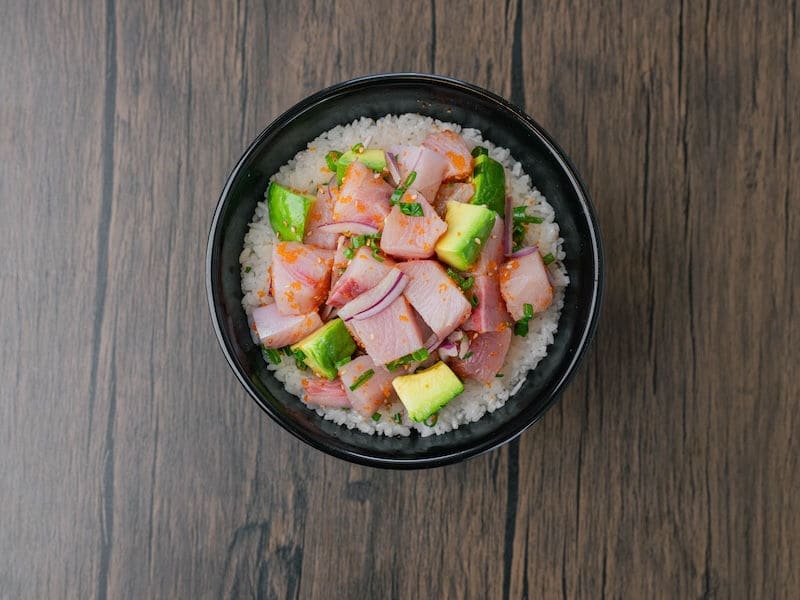
Hamachi (yellowtail) sits between the other two, softer than ahi, less overtly rich than salmon, with a flavor some people describe as faintly nutty or buttery without being heavy. It is a favorite for sashimi specifically because the texture is clean without being as assertive as tuna. On its own in poke it is less common, more often paired alongside ahi or salmon, as in the Hamachi Poke bowl or worked into a combo bento. If you already like both ahi and salmon, hamachi is worth trying as the fish that splits the difference.
The premium extras: scallop, uni and ikura
Beyond the three main fish, a handful of items appear when available: Hokkaido scallop, Hokkaido uni and ikura (salmon roe). Hokkaido scallop shows up on the Hotate Platter, a nigiri spread weighted toward scallop alongside the three main fish, and again on the Premium Nigiri Platter with unagi and masago. Ikura is on the Sunrise Platter. Uni is the headline of donburi bowls like the Ashley Kaisen Don, which is limited enough to require a call ahead to check availability before ordering online. Treat these as the items to ask about rather than assume are always on hand, since scallop and uni in particular are the kind of product that varies day to day even at a kitchen committed to sashimi grade fish.
If you are choosing for a group
Mixed groups usually do best with a platter that already covers all three. The Domo Premium poke bowl combines ahi, salmon and hamachi with onion, avocado and ikura in one order, and several of the nigiri platters run all three fish side by side so nobody has to pick just one. That is often the simplest answer to “which fish should I get”: order enough of the platter that covers all three, and let people find their favorite at the table.
Not sure what to order
Tell us how many people you are feeding and whether anyone has a strong preference for rich versus lean fish, and we can point you to the platter that covers it. Reach Kahala at (808) 888-8860 or Pearl Kai at (808) 312-1385, both open daily, or browse the full sushi menu and build your own order from there.
More questions
Which fish is best for someone trying raw fish for the first time?
Salmon, usually. It is rich and mild rather than oceanic, and most people already know the flavor from cooked salmon. Ahi is a close second if someone prefers a firmer, cleaner bite.
Is hamachi the same as yellowtail?
Yes, hamachi is the Japanese name for Japanese amberjack, commonly called yellowtail on English menus. Domo lists it as hamachi across nigiri, sashimi and poke.
What is the most premium option on the menu?
Hokkaido uni, Hokkaido scallop and ikura are the items that show up when available, on the Hotate and Premium Nigiri platters and in the Ashley Kaisen Don. They are seasonal-leaning extras rather than everyday stock, so ask what is on hand that day.
What this looks like at Domo
Every item below is on the current menu with its published price. See the full menu.
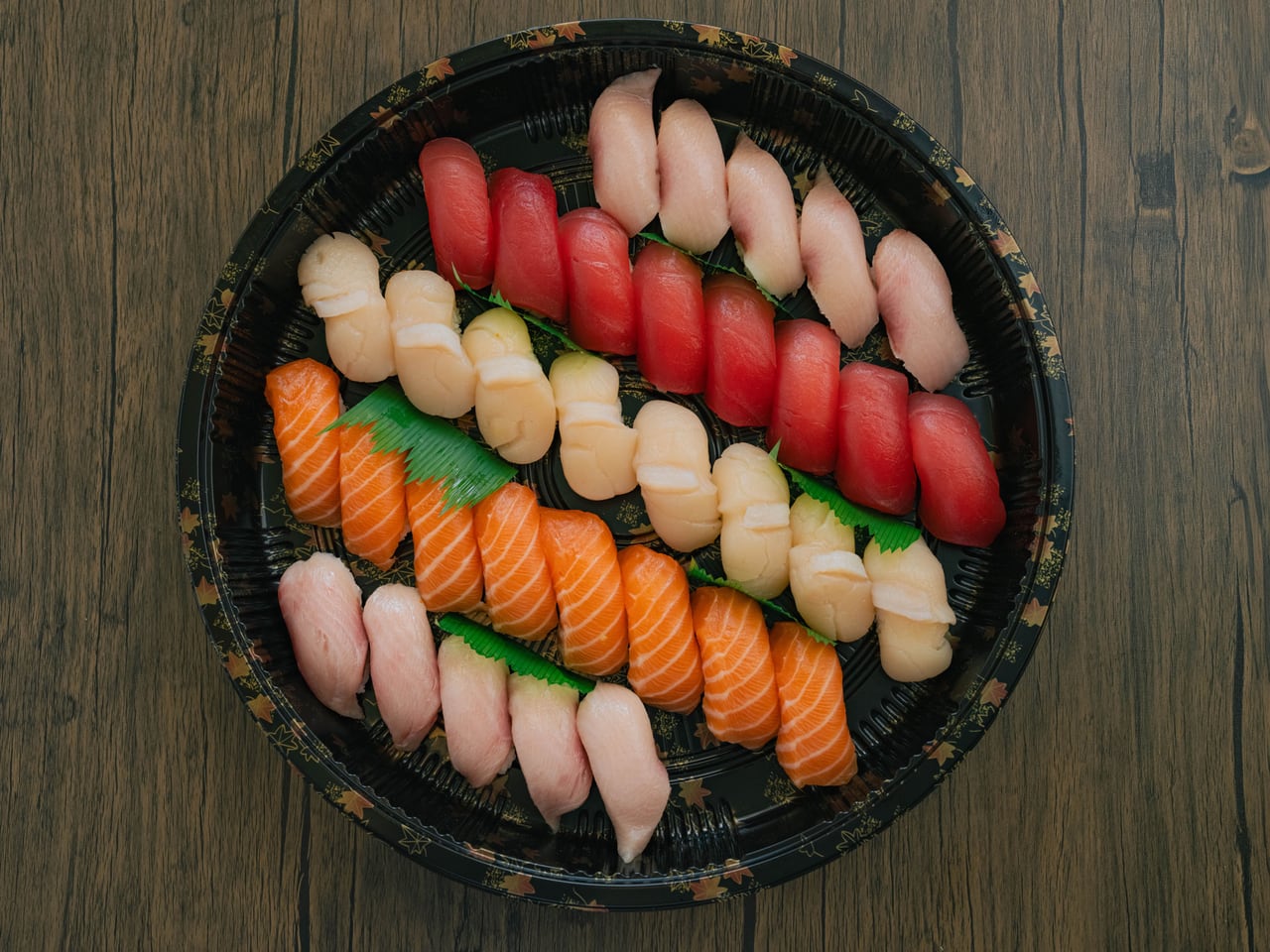
Menu number #12Hotate Platter
Hokkaido scallop, Japanese hamachi, local ahi and salmon nigiri.
$100.95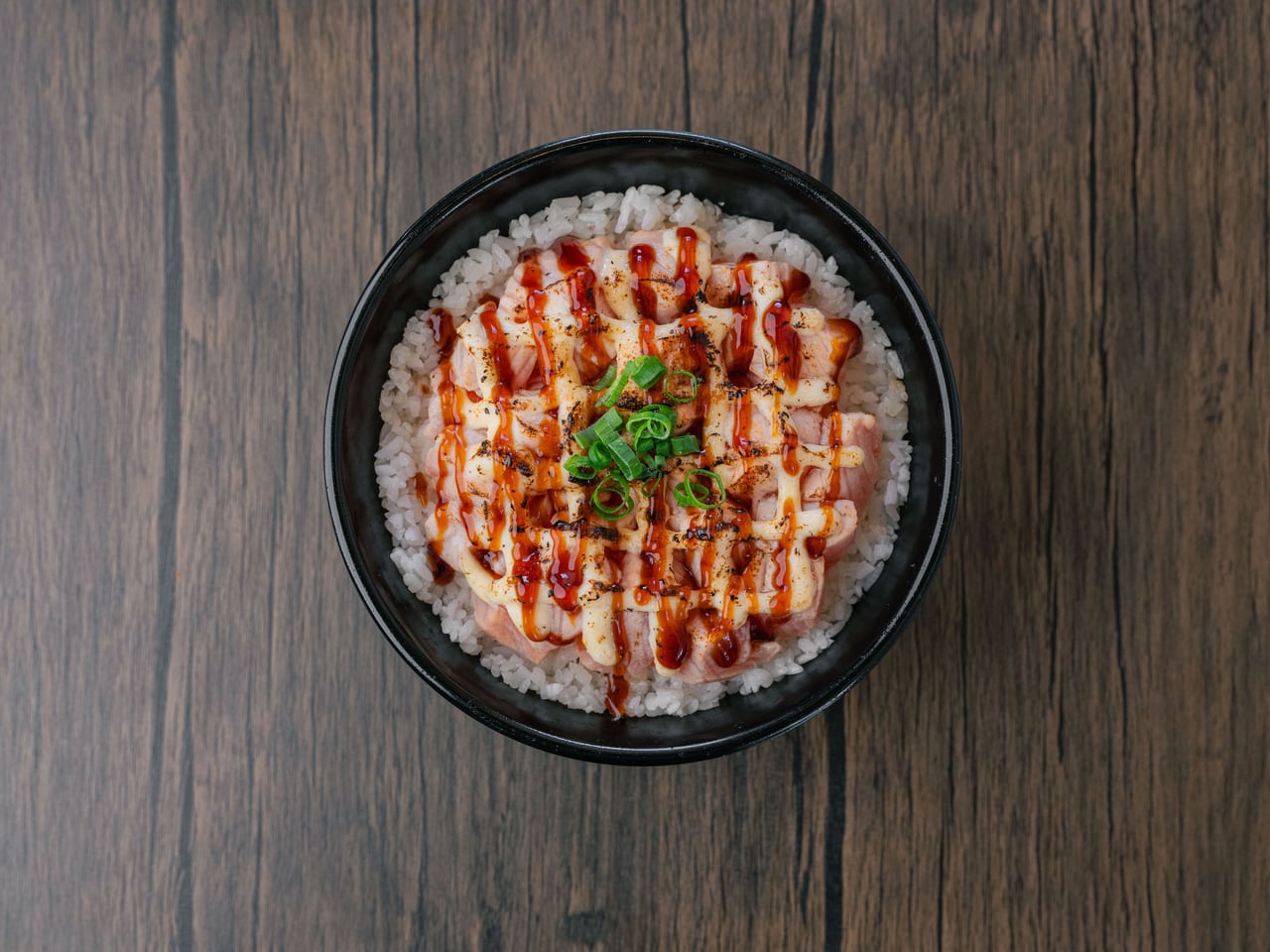
What this looks like
Domo's own photography. More on Inside Domo
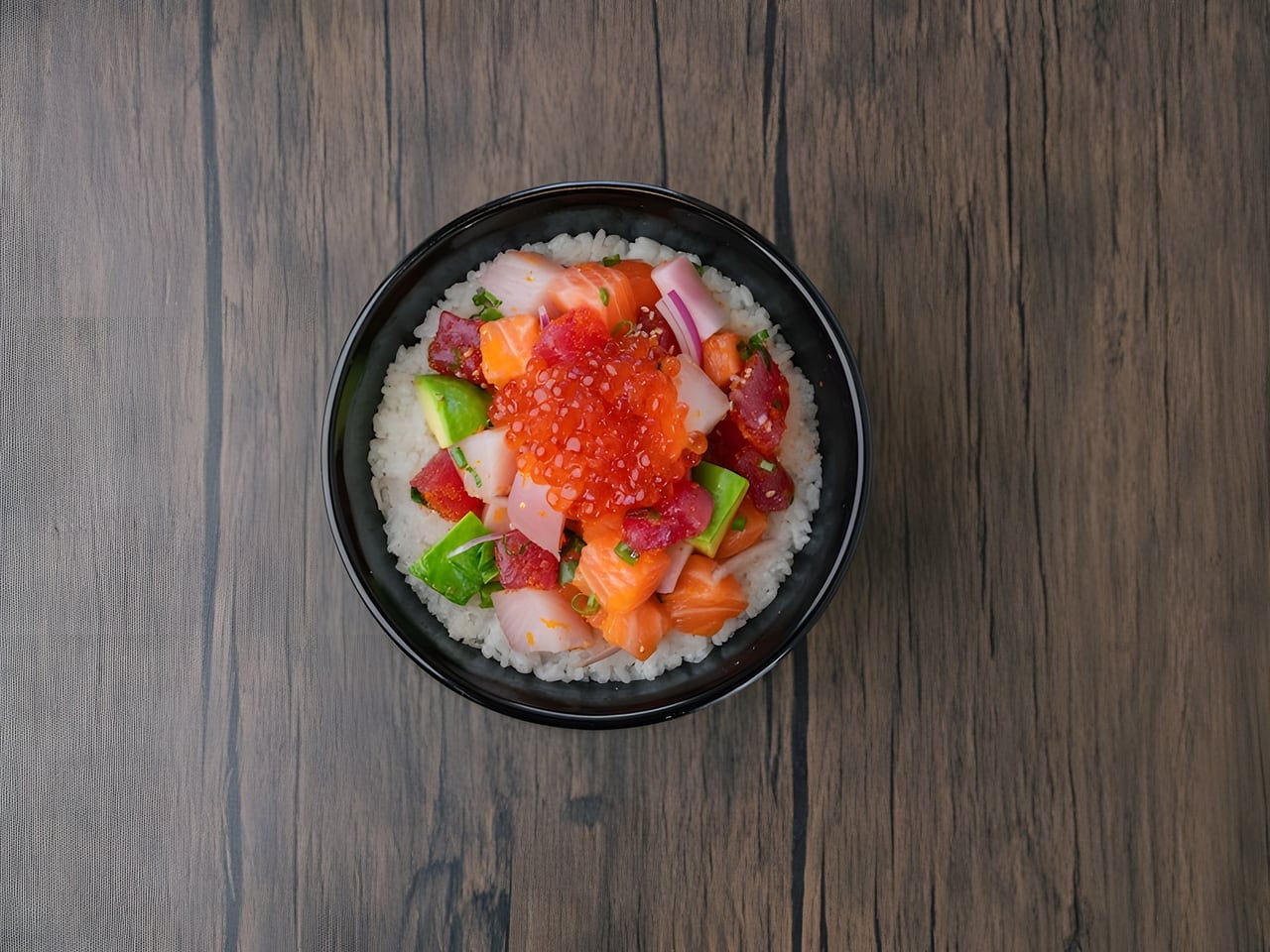
Salmon and its own roe
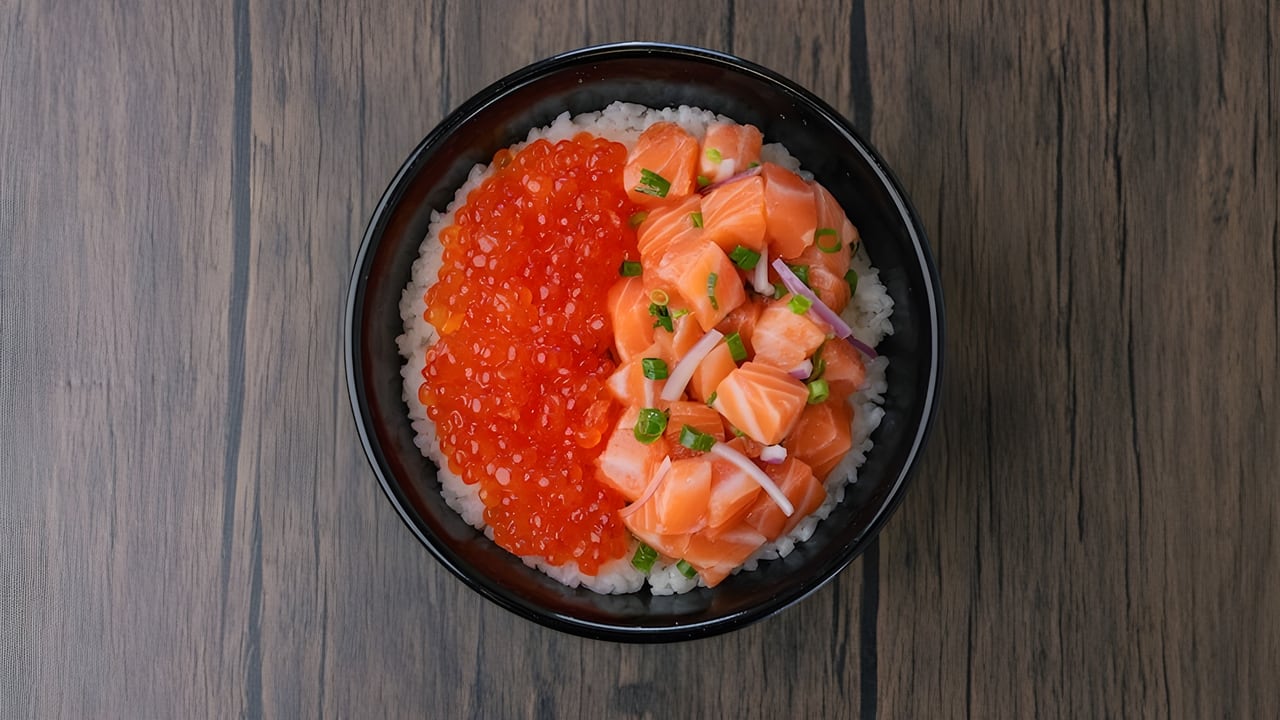
The Ikura and Salmon don. Fresh salmon with salmon roe over rice, which is about as direct as the menu gets.
Related guides
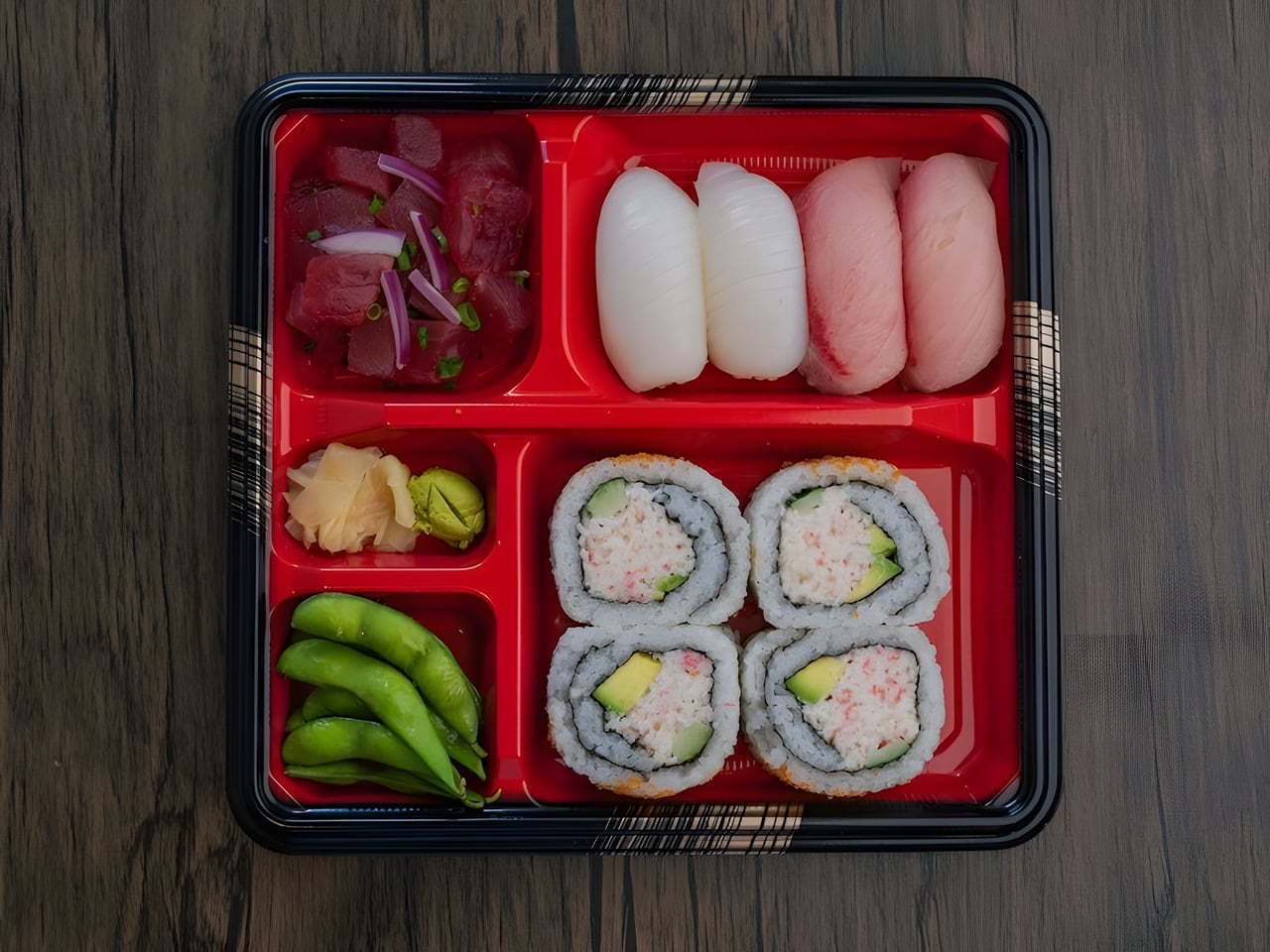
Shoyu, Spicy, Wasabi, Yuzu or Onion: Choosing Your Poke
A plain guide to the five ahi poke styles Domo prints on its menus, what each one tastes like, and which bowls suit which eater.
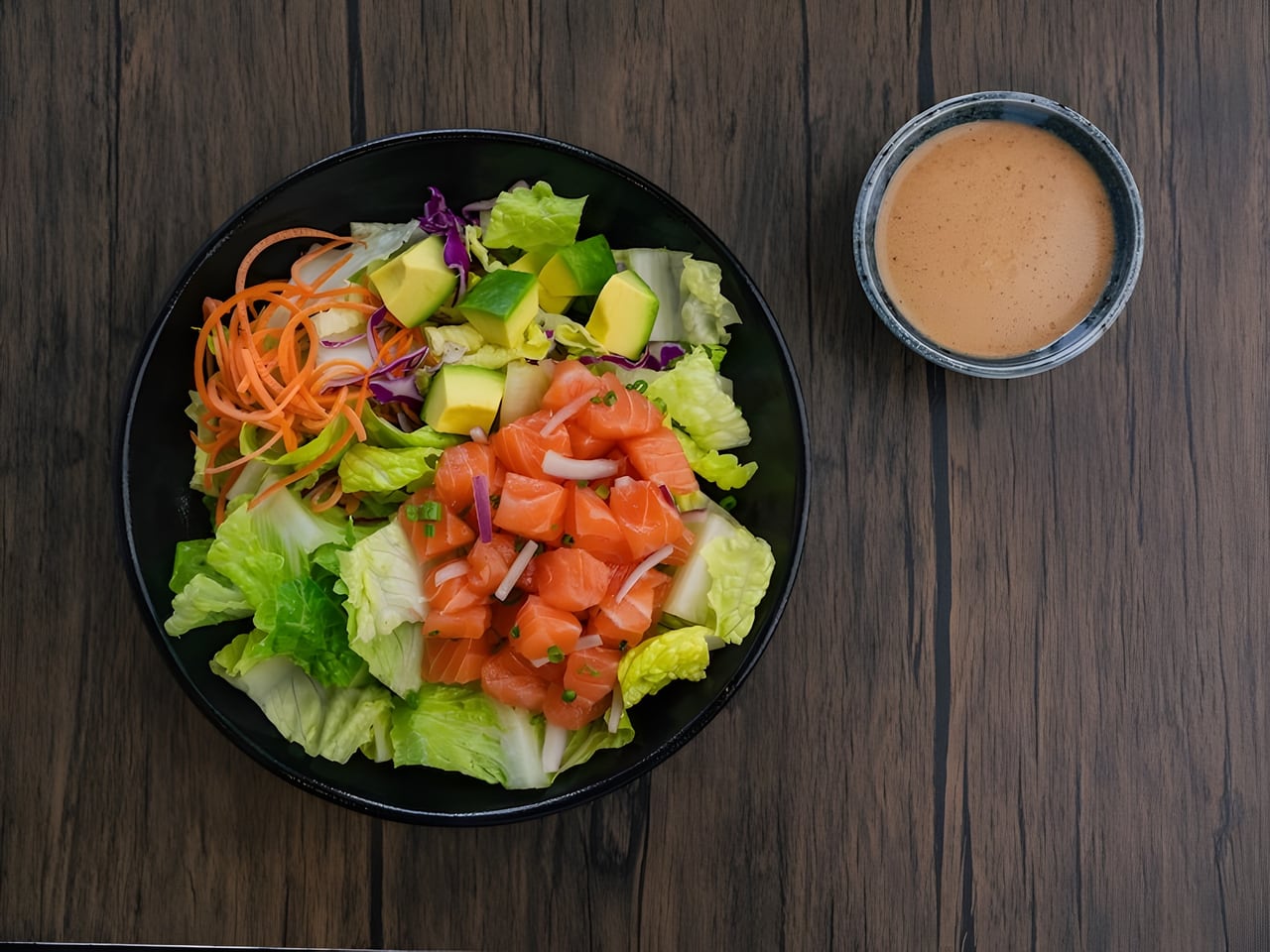
What Does Sashimi Grade Fish Mean?
There is no government agency that grades fish for raw eating. Here is what the term actually describes, and what a serious operator does to earn it.
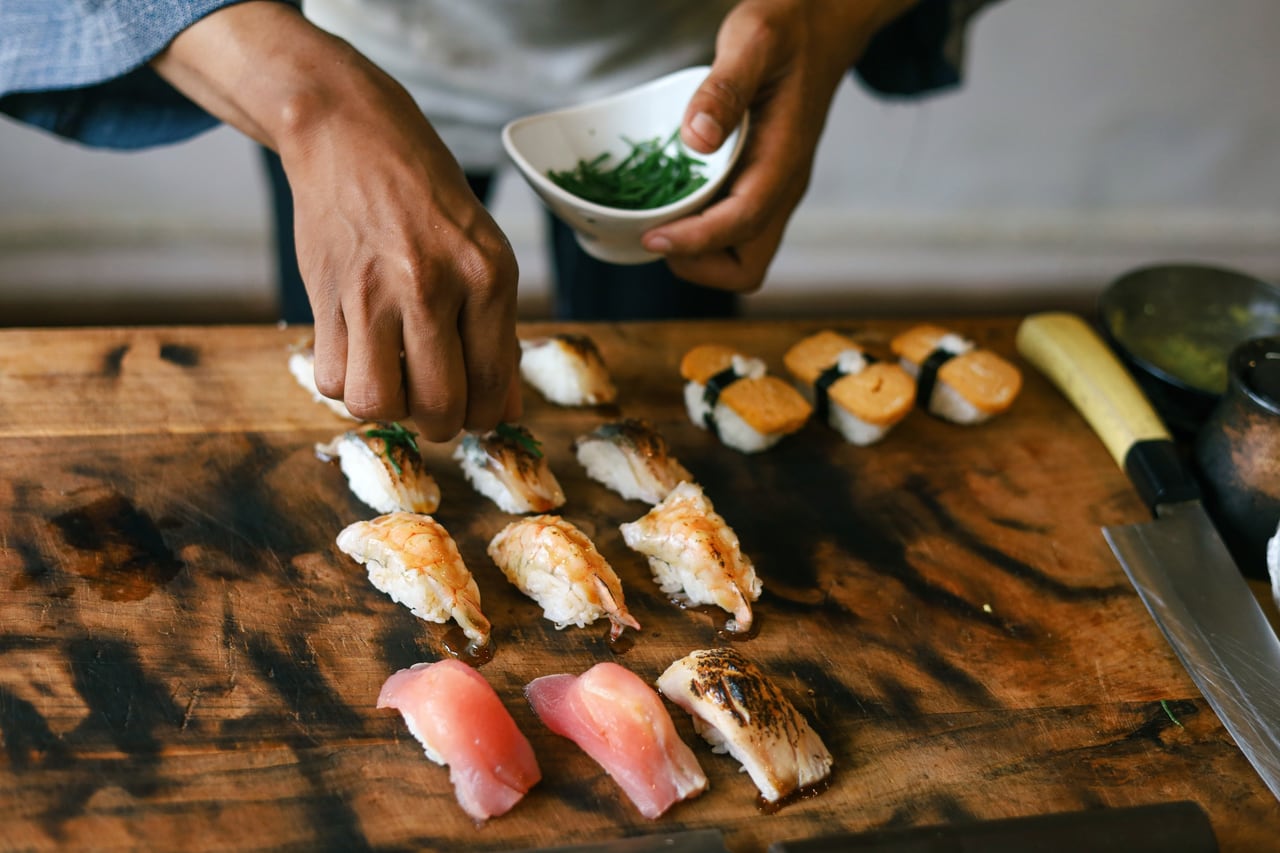
How to Handle Sushi After Pickup
Cold, covered and eaten the same day. What to actually do with a platter between the counter and the table, and why the rice suffers first if you get it wrong.