
What does "sashimi grade" actually mean?
There is no government agency that grades fish for raw eating. Here is what the term actually describes, and what a serious operator does to earn it.
“Sashimi grade” is not a government grade. No agency issues it, no inspector stamps it, and there is no legal definition anyone has to meet to use the words. It is a standard the seller sets for themselves, which means the term is only as good as the operator using it.
That is not a reason to ignore the label. It is a reason to understand what it should mean in practice, and to ask the people behind the counter how they back it up.
Why there is no official grade
Fish grading systems that do exist (things like size and fat grades used in Japan’s wholesale auctions) describe quality tiers for buyers and sellers. They are not safety certifications, and they are not the source of the “sashimi grade” language used on menus in the United States. Here, the phrase is industry shorthand, not a regulated category. Any operator can put it on a menu. The difference between one that means something and one that does not comes down to what happens between the dock and the plate.
What a serious operator is actually doing
Strip away the marketing language and a few things separate fish meant to be served raw from fish meant to be cooked:
Buying decisions. Someone is choosing which fish, from which source, is fit to serve without cooking, and turning away anything that is not. That judgment call happens before the fish ever reaches a kitchen.
Temperature control from the moment it arrives. Fish for raw service needs to stay cold, consistently, through receiving, storage and prep. Time spent at room temperature is the enemy of both safety and texture, and a broken cold chain anywhere along the way undoes everything done right before it.
Handling that limits exposure. Fewer hands, shorter time out of refrigeration, and clean surfaces at every step. This is less a single dramatic protocol and more a habit repeated correctly, order after order.
Trimming. Bloodline, skin, pin bones and any discolored flesh get removed before the fish is fit to serve raw. This is a visible, physical step, and it is one you can often watch happen if you are standing at the counter.
Cutting to order. Fish sliced minutes before it reaches you has spent less time exposed than fish sliced hours ahead and held on a tray. This is one of the simplest, most reliable signals of how a kitchen treats raw fish.
None of this is exotic. It is the ordinary discipline of a kitchen that takes raw fish seriously, done consistently enough that customers can trust it without watching every step themselves.
What Domo says
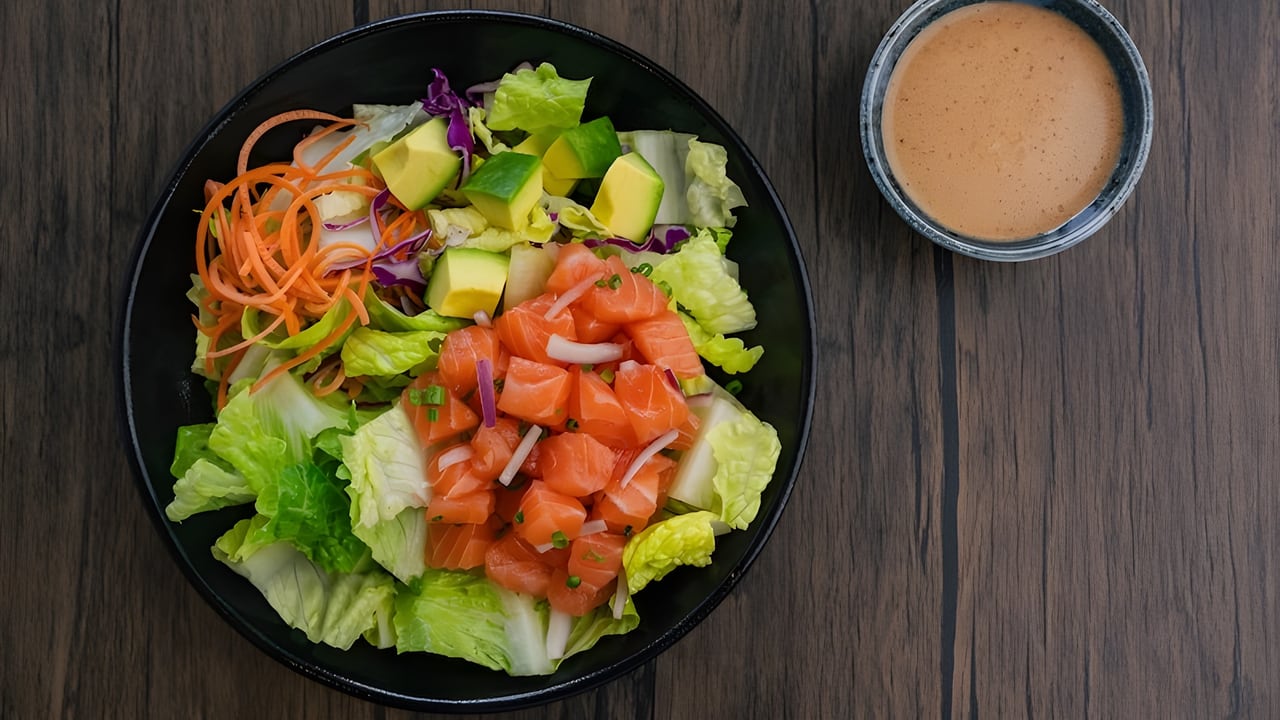
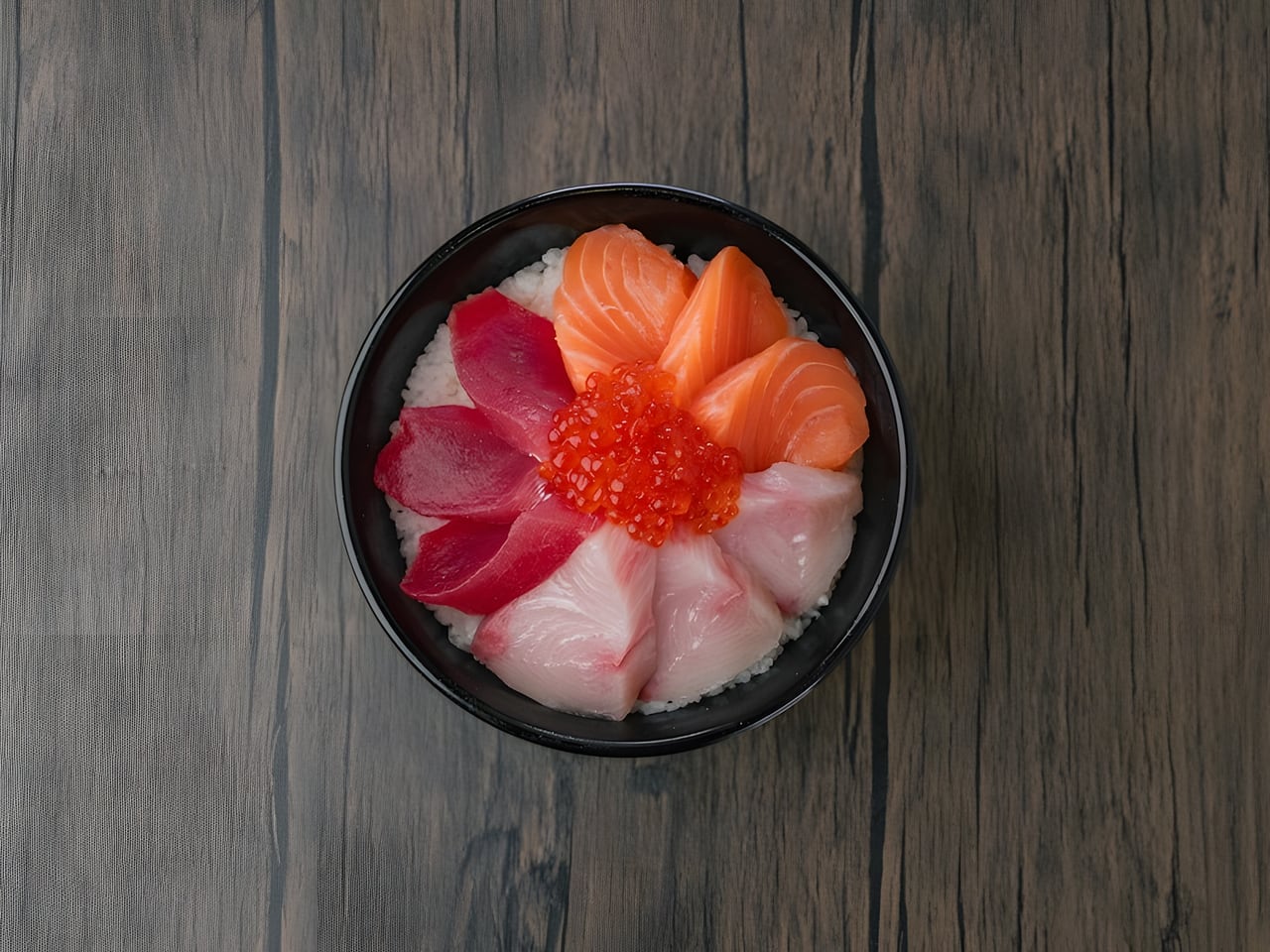
Domo’s own claim has been on the menu for a long time: always sashimi grade fish. It is not a certification and we are not going to pretend it is one. It is a standard we hold ourselves to, on sashimi, on nigiri, and on the poke bowls built from the same fish.
Treat the claim as what it is: a promise we are accountable for, backed by a kitchen that cuts to order every day, not a badge issued by anyone else. If you want to know more about a specific fish, ask at the counter.
The honest way to evaluate a “sashimi grade” claim
Ask the seller how the fish moves from arrival to your plate. A vague answer, or no answer, tells you something. A kitchen that can describe its own process, even in plain terms, usually earns the label. That applies to us as much as to anyone else, which is why we would rather point you to our fresh fish page and to the counter itself than let three words on a menu do all the talking.
If raw fish is not right for your group, that is a separate and easier question. Our journal on choosing sushi for guests who skip raw fish walks through the cooked and vegetarian options that run through the same kitchen.
Ask us directly
If you want specifics before you order, especially for a platter you are serving to a group, call the counter. Kahala is at (808) 888-8860 and Pearl Kai is at (808) 312-1385, both open daily. A real person who cut the fish that morning is a better source than any label on a menu, ours included.
More questions
Is sashimi grade a government or FDA rating?
No. There is no federal or state agency that stamps fish "sashimi grade." The term is set by whoever is selling the fish, which is exactly why who is selling it matters more than the label itself.
Does sashimi grade mean the fish was frozen?
Freezing to a set temperature for a set time is one common way operators manage the parasite risk in raw fish, but methods and schedules vary by species and by seller. Ask the counter you are buying from what they do rather than assuming a label covers it.
Is raw fish safe for everyone?
General food safety guidance points to caution for pregnant, elderly and immunocompromised people around raw fish. If that applies to you or someone you are feeding, talk to your doctor before ordering raw.
What this looks like at Domo
Every item below is on the current menu with its published price. See the full menu.
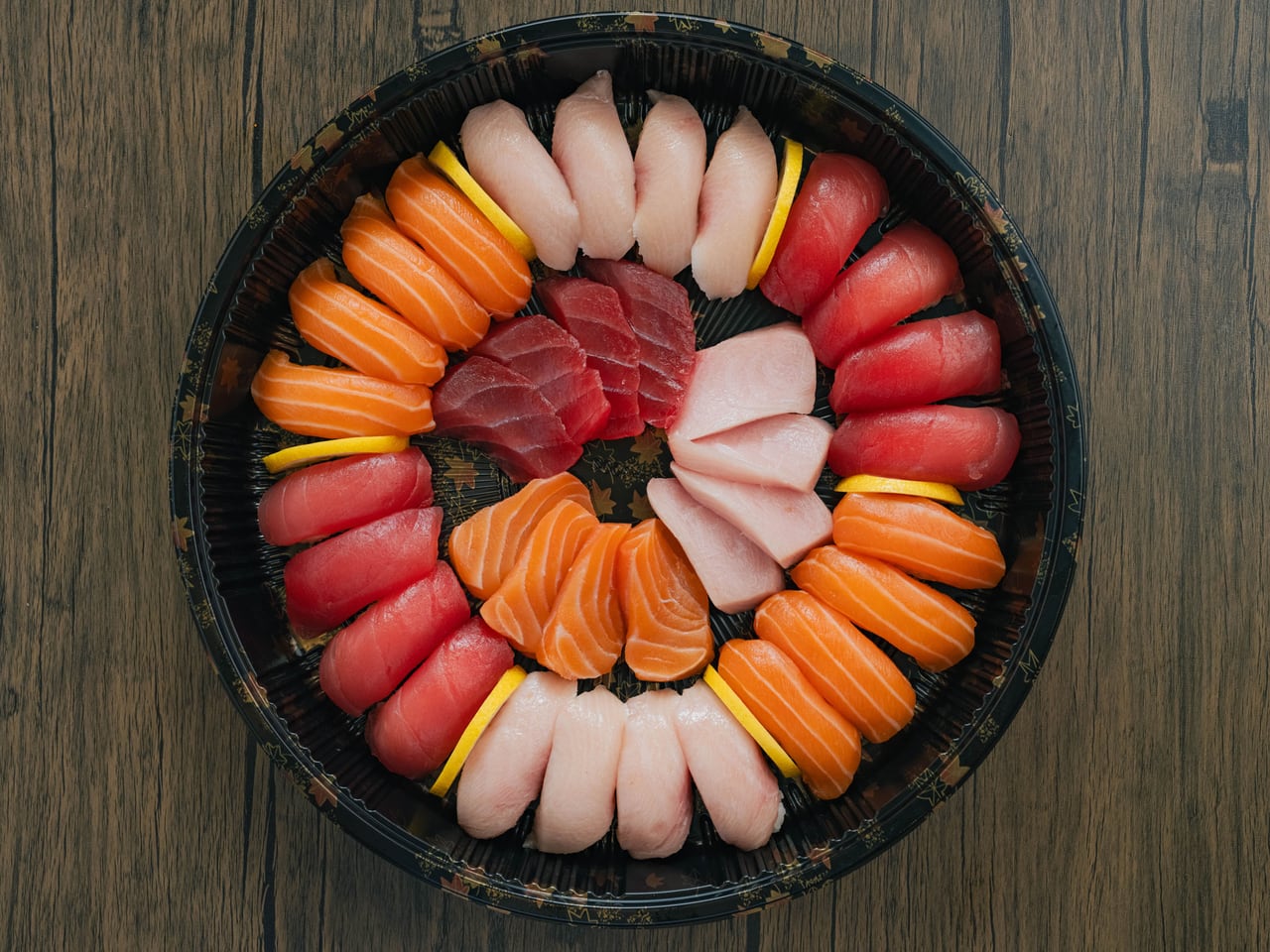
Menu number #5Nigiri & Sashimi Trio Platter
Ahi, salmon and hamachi on one platter, served both as nigiri and as sashimi.
$81.95Menu number #5Nigiri & Sashimi Trio Platter
Ahi, salmon and hamachi on one platter, served both as nigiri and as sashimi.
$81.95
What this looks like
Domo's own photography. More on Inside Domo
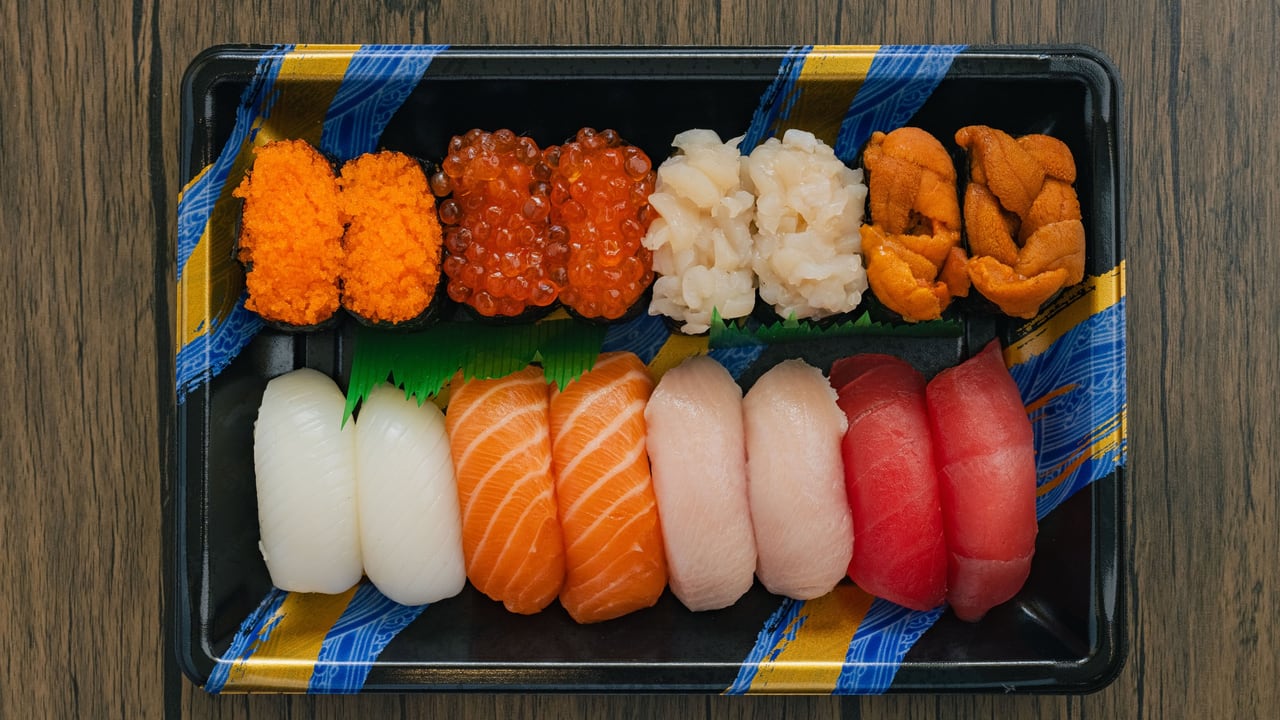
Uni and ikura, when they come in
Hokkaido uni and scallop, ikura and masago, at the premium end of the case.
Related guides
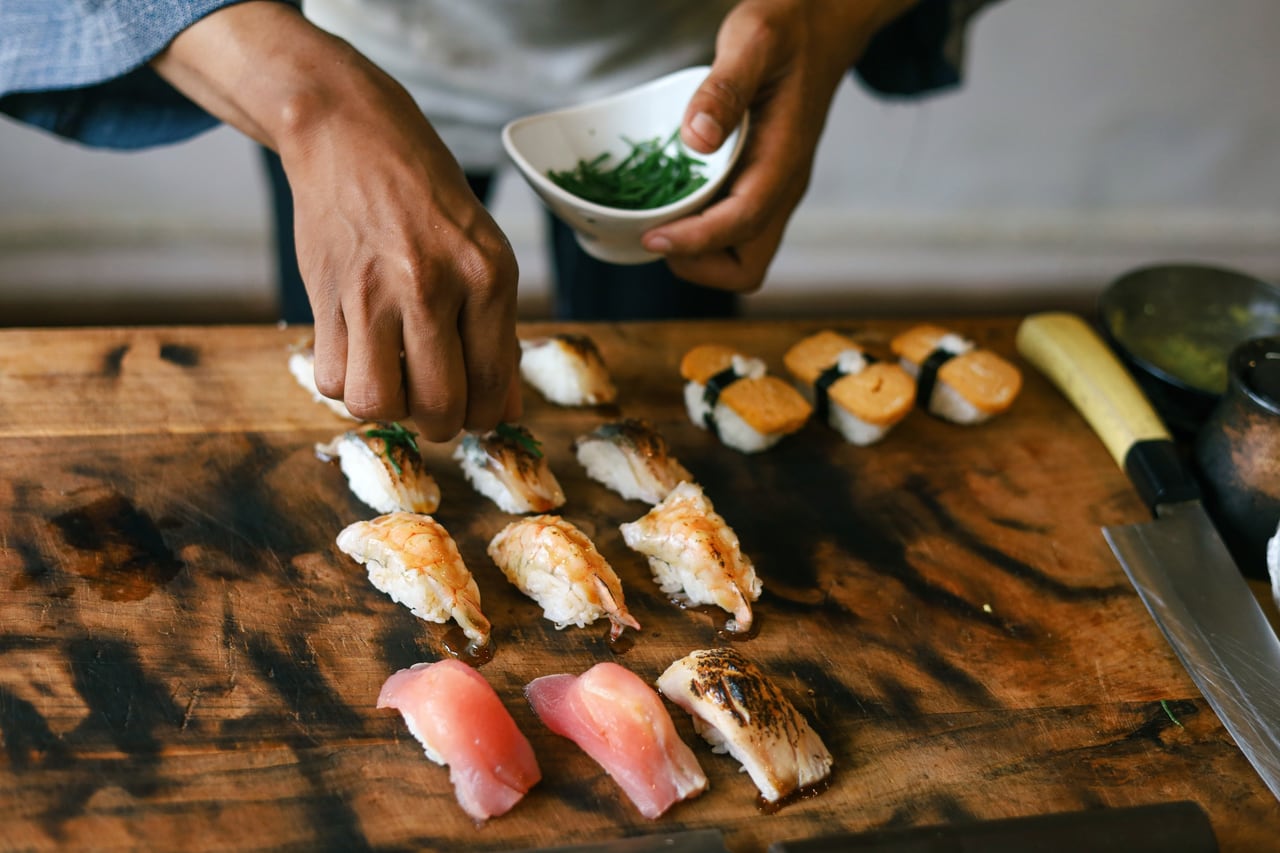
How to Handle Sushi After Pickup
Cold, covered and eaten the same day. What to actually do with a platter between the counter and the table, and why the rice suffers first if you get it wrong.
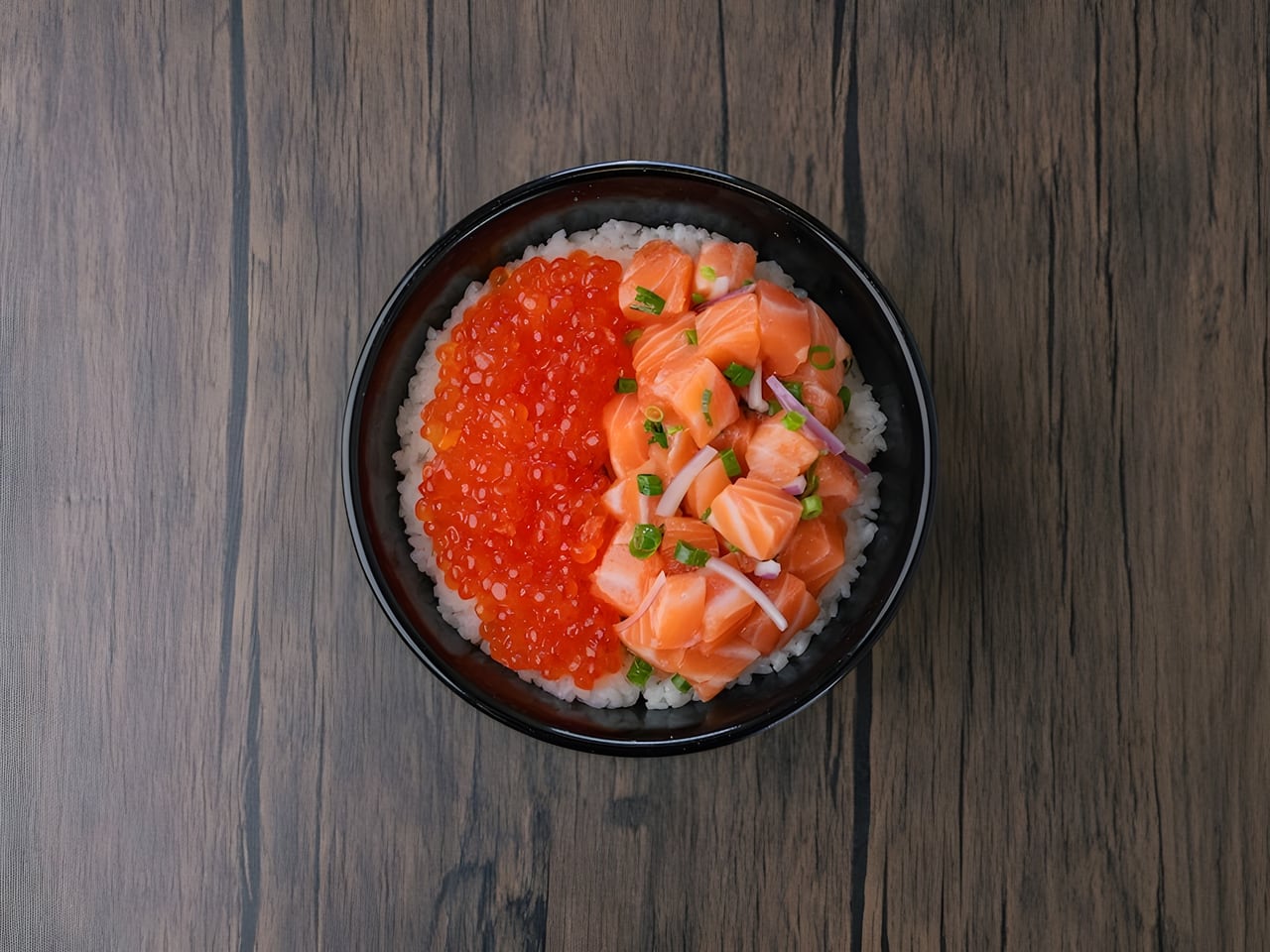
Ahi, Salmon and Hamachi: How to Choose
The three fish that carry Domo's menu, compared on texture, fat and flavor, plus what each one suits best raw, seared and in poke.
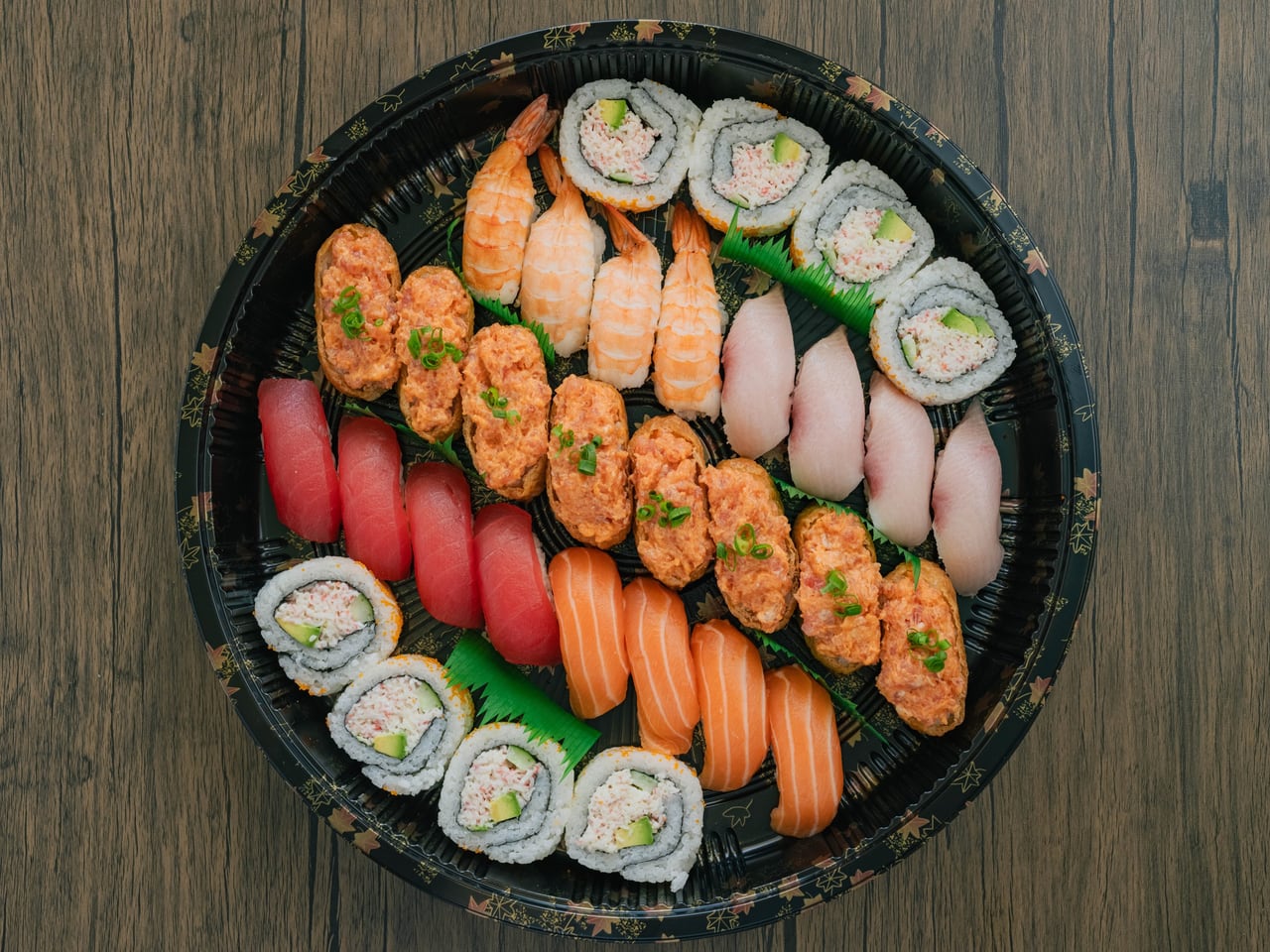
How Much Sushi Do I Need Per Person?
A starting number for 10, 20, 30 or 50 people, worked through with real platter piece counts, plus the adjustments that actually change the answer.