
How to choose a sushi platter
A decision guide to Domo's sushi platters, sorted by group makeup, raw versus cooked, piece count and price, with real names and a live comparison table.
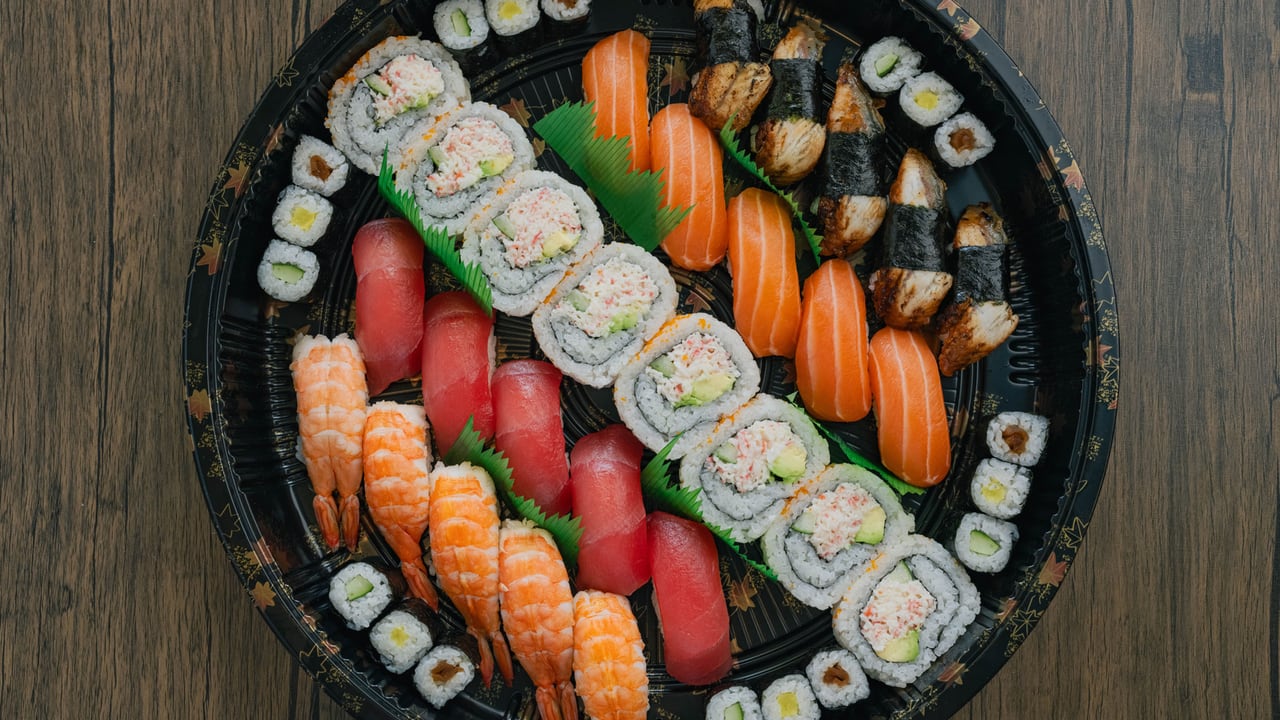
Start with who is eating, then use raw versus cooked, piece count and price to narrow the field. The right platter has more to do with your group than with your taste.
Every platter, side by side
Prices and piece counts change when Domo reprints the menu, so this guide does not copy them out. The platter comparison table lists every platter with its piece count, price, contents and whether it includes anything cooked, largest first, and it is built from the same data the menu pages use. The answer to “which platter feeds the most people” is the top row.
What follows is the part a table cannot do: which one suits your group.
By group makeup
A mixed group, some raw eaters and some not, is best solved by pairing a cooked platter with a raw one rather than by picking one platter and hoping. The California Roll Platter is fully cooked and pairs naturally with almost anything else on the list.
A room of people who all eat raw fish and want variety does well with the Mixed Combo Platter or the Sunrise Platter, both built from several fish types rather than one.
A potluck or family gathering where kids are involved usually lands on California roll. It travels well, has no raw fish and reads as familiar to guests who are new to sushi.
Anyone building a spread around bold flavor should look at the Karai & Ninniku Platter, the Deluxe Sushi Platter or the Sushi Combo Platter, all built around spicy ahi.
By raw versus cooked
The California Roll Platter is the only fully cooked option. Everything else carries some amount of raw fish, though several platters mix in cooked components: the Mixed Combo Platter and the Sushi Combo Platter both carry California roll and cooked nigiri like unagi and ebi alongside the raw pieces, so they work for a group that’s mostly comfortable with raw fish but not entirely.
At the raw end sit the Nigiri & Sashimi Trio, the Hotate Platter and the Premium Nigiri Platter, which is the one that adds Hokkaido scallop and unagi. If your group is confident with raw fish and wants to lean into it, start there. The comparison table marks the cooked content on every row.
By piece count
Almost every platter publishes an exact total, which is what makes a headcount possible: work out how many pieces you need with the per person guide, then read the piece count column and pick a combination that clears it.
Two things are worth knowing before you do the arithmetic. Similar prices do not mean similar piece counts, which is why the table puts the piece count beside the price. And the largest platter on the menu is not the most expensive one.
By price
The two Kahala sets are built for one or two people rather than for a group. Most of the group platters sit in a band close enough together that piece count, not price, is what separates them, and it’s the range worth comparing closely. Above that sit the platters built around Hokkaido scallop, unagi and ikura, where you are paying for what is on the tray rather than for more of it.
Order for the shape of your group
Work out the headcount, whether anyone skips raw fish, and roughly what you want to spend, then match it against the platter menu with the quantity planner. Everything is built from what the kitchen makes that day, so order online in advance for the pickup date and time you want.
More questions
Which platter is the safest choice for a group I don't know well?
The Mixed Combo Platter. It carries raw nigiri, California roll and hosomaki in one 46 piece order, so there is something for the cautious eater and the person who wants real fish.
Is there a fully cooked platter?
Yes. The California Roll Platter is 32 pieces of California roll, crab, avocado and cucumber, no raw fish at all.
Do all the platters list an exact piece count?
Almost all of them do. The Nigiri & Sashimi Trio is priced as a composed platter rather than by piece count. Ask when you order and the store will walk you through it.
What this looks like at Domo
Every item below is on the current menu with its published price. See the full menu.
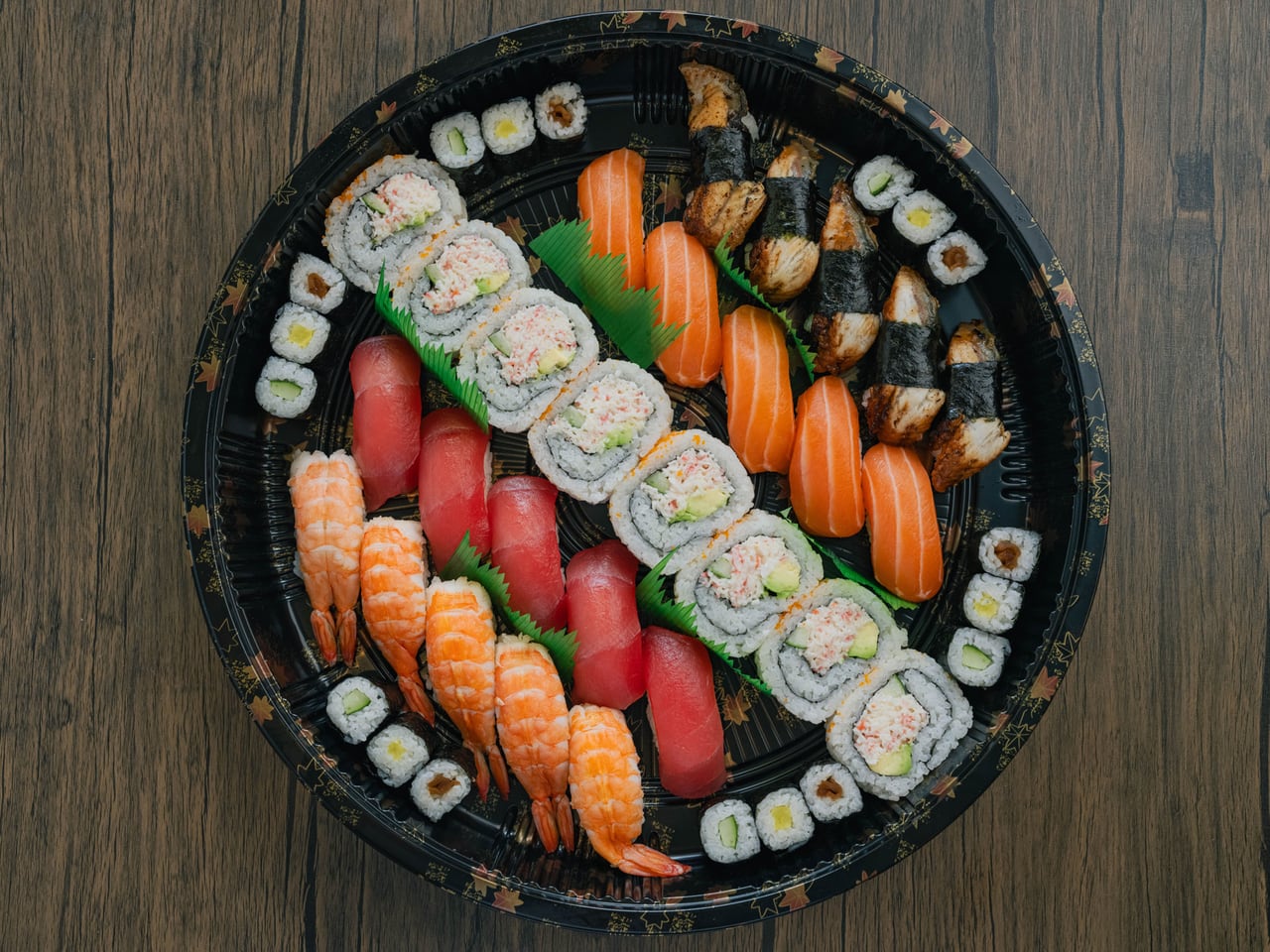
Menu number #4Mixed Combo Platter
Forty six pieces: ebi, local ahi, salmon and unagi nigiri, California roll and assorted hosomaki.
$61.95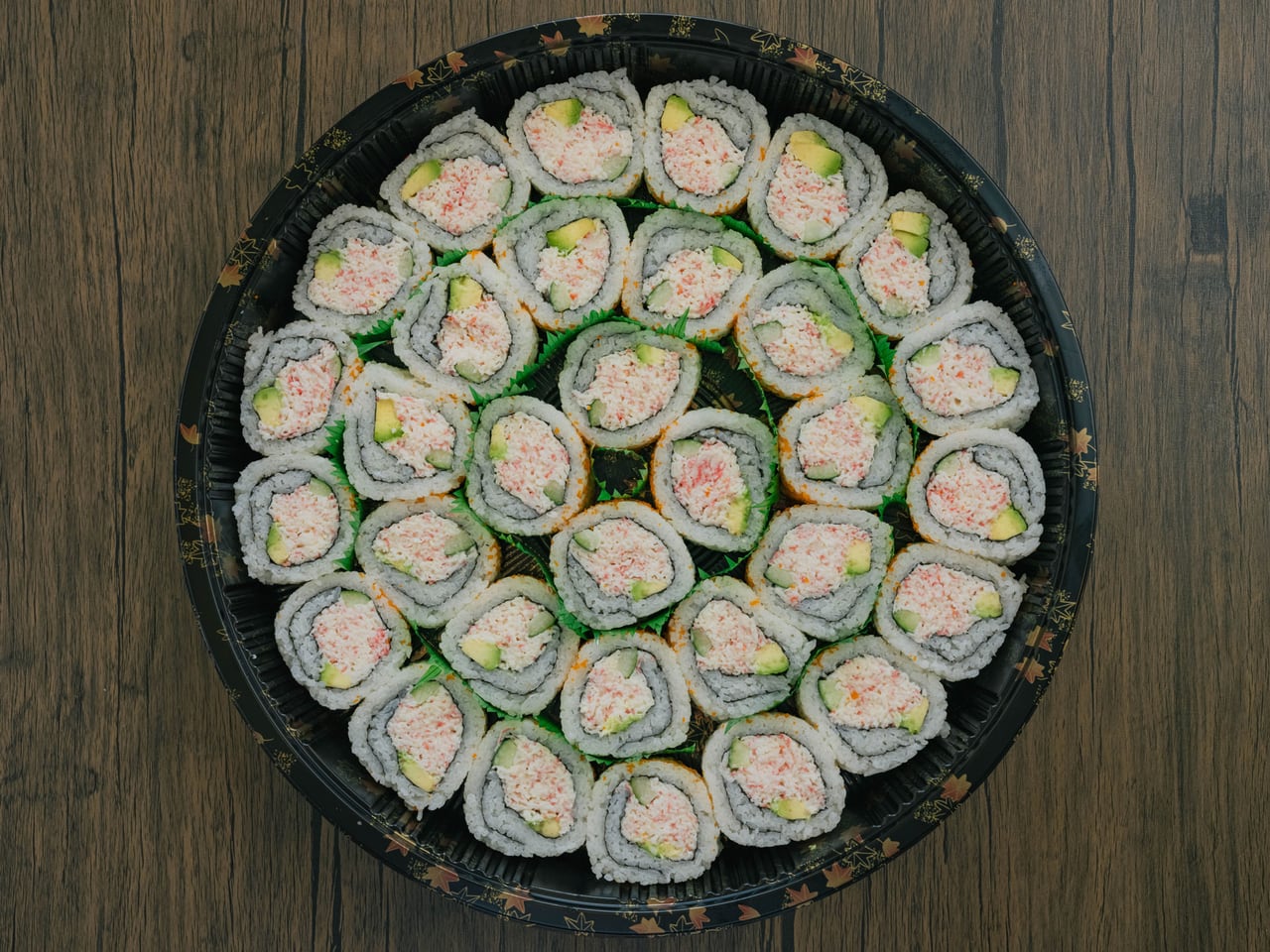
Menu number #7California Roll Platter
Thirty two pieces of California roll, so a table that skips raw fish is covered.
$56.95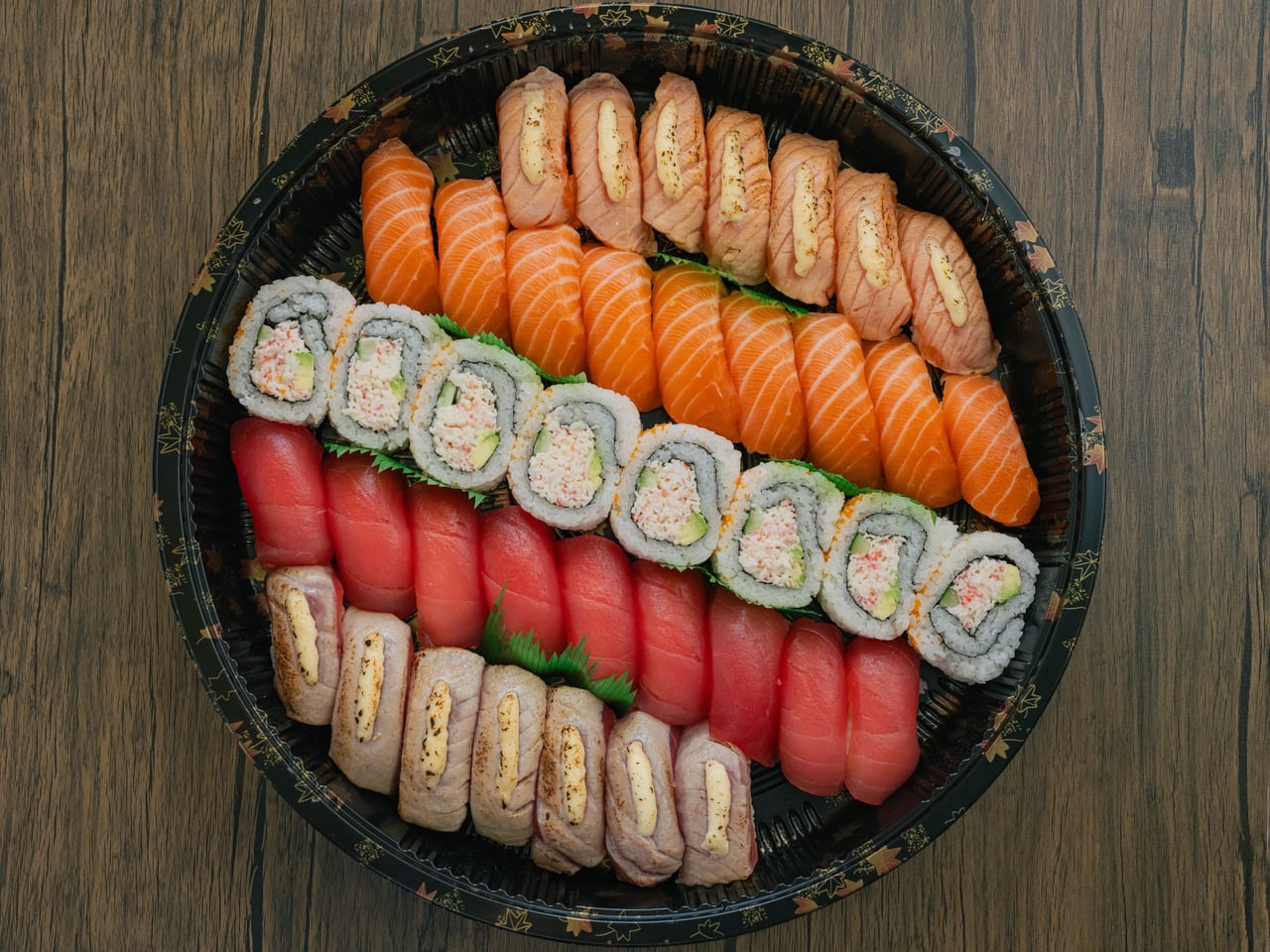
Menu number #11Kazoku Sushi Platter
Forty pieces of ahi and salmon nigiri, half of it torched garlic, with eight California roll.
$76.95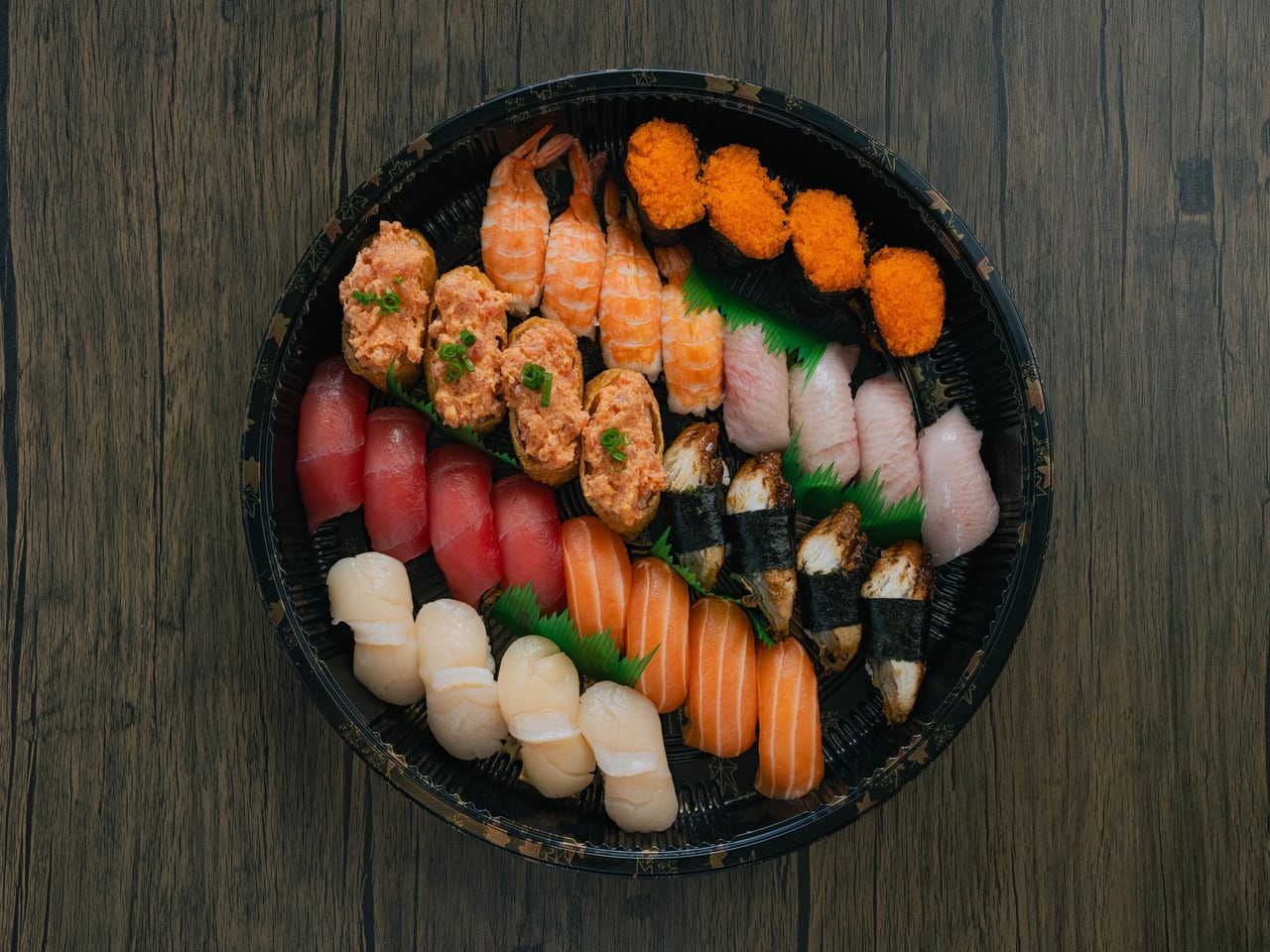
Menu number #10Premium Nigiri Platter
Eight varieties, four pieces each: Hokkaido scallop, local ahi, ebi, unagi, spicy ahi bombs, salmon, hamachi, masago.
$79.95
What this looks like
Domo's own photography. More on Inside Domo
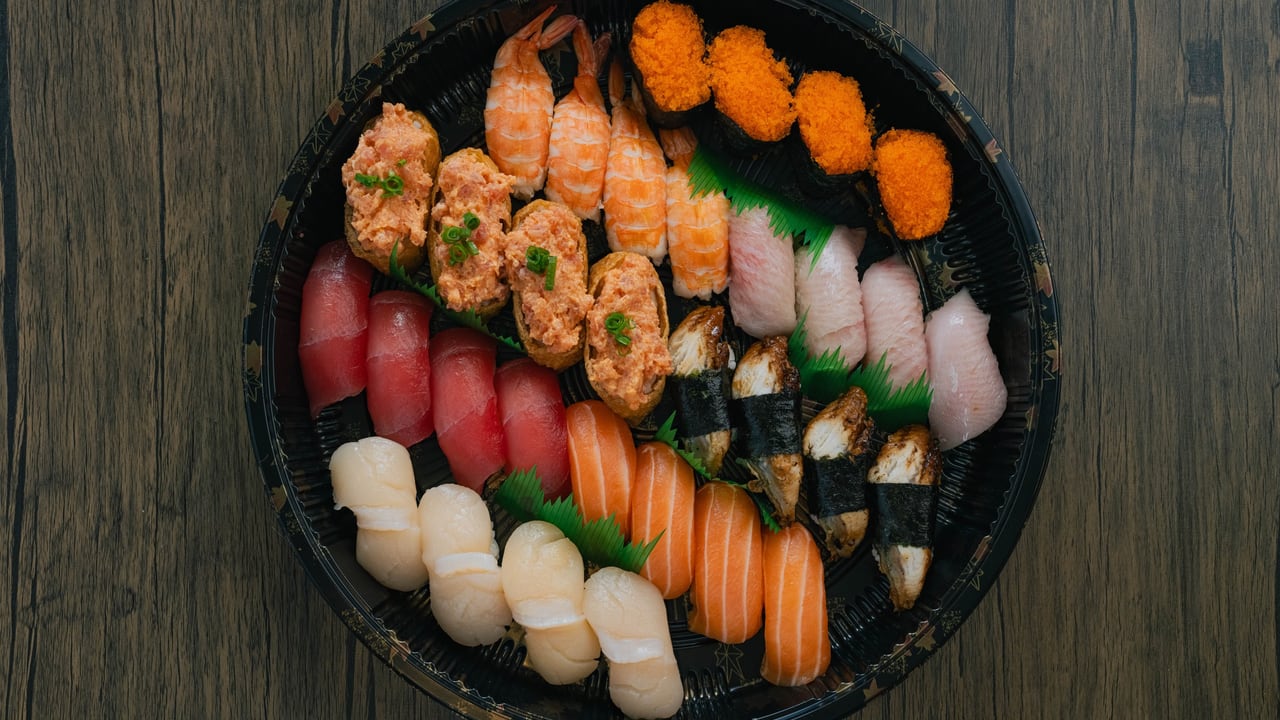
Eight varieties, four pieces each
The Premium Nigiri Platter: Hokkaido scallop, ahi, ebi, unagi, salmon and hamachi laid out in bands across a single tray.
Related guides
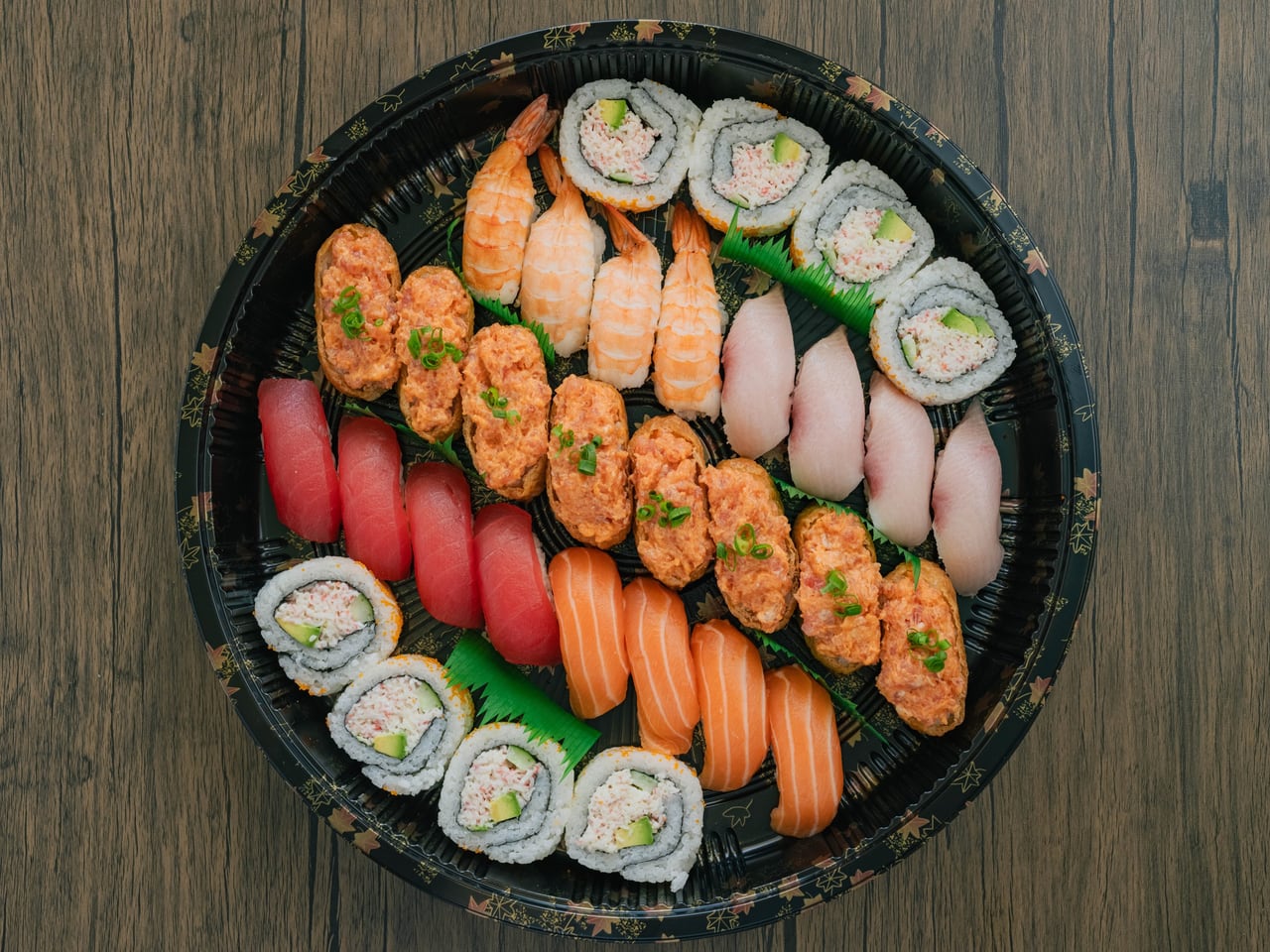
How Much Sushi Do I Need Per Person?
A starting number for 10, 20, 30 or 50 people, worked through with real platter piece counts, plus the adjustments that actually change the answer.
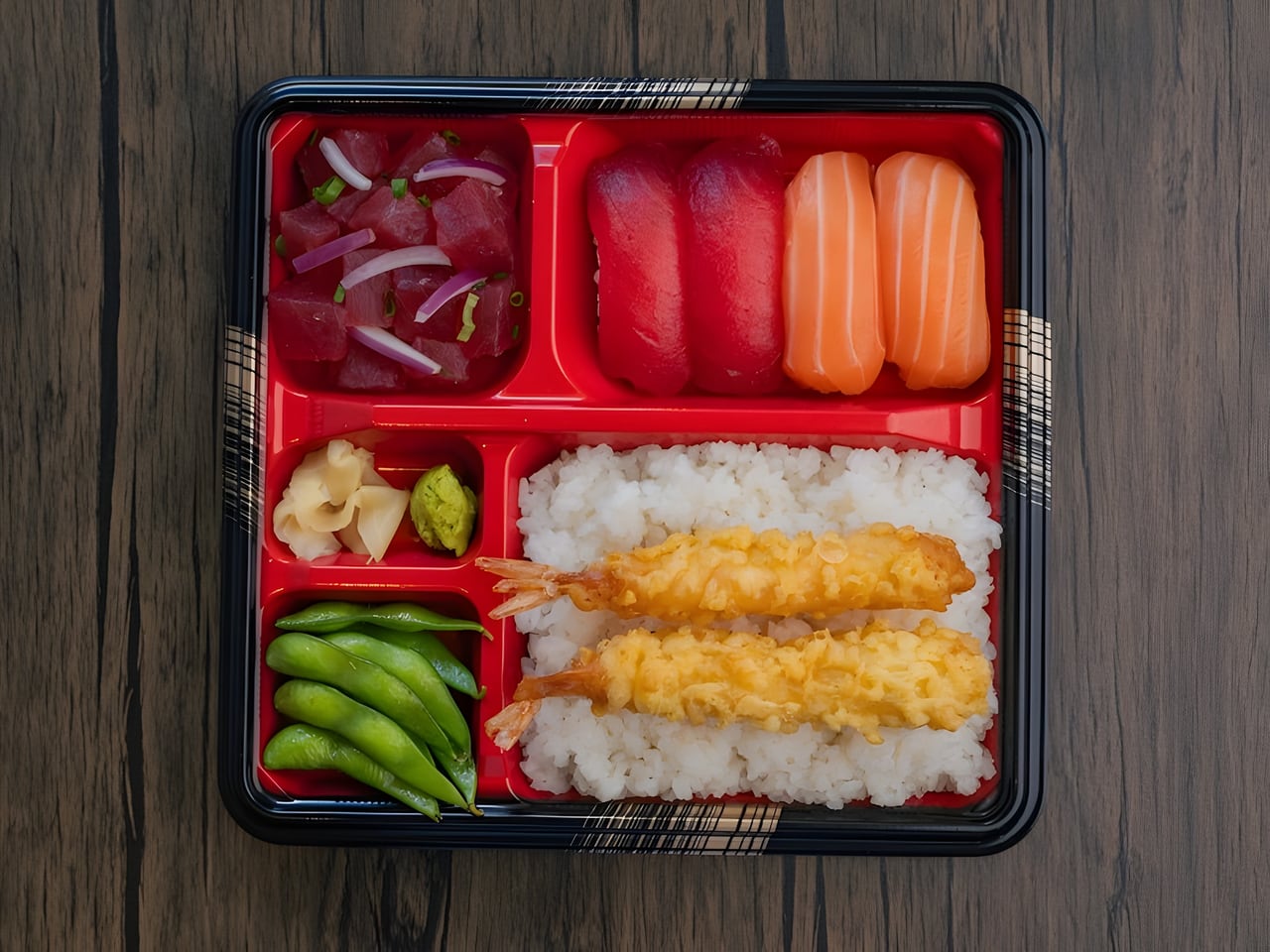
How to Order Sushi When Some Guests Do Not Eat Raw Fish
A practical split for parties with mixed appetites. The cooked items on Domo's menu, how to divide the order, and a starting ratio for how much to buy.
Best Sushi for an Office Lunch
What to order for 8, 15 or 30 people in a conference room, using real platters and bentos, plus the practical points that matter for a working lunch.