
What is aburi sushi?
Aburi means torched. A guide to why Domo sears certain nigiri with a blowtorch, why fattier fish takes to it, and what changes in texture and flavor.
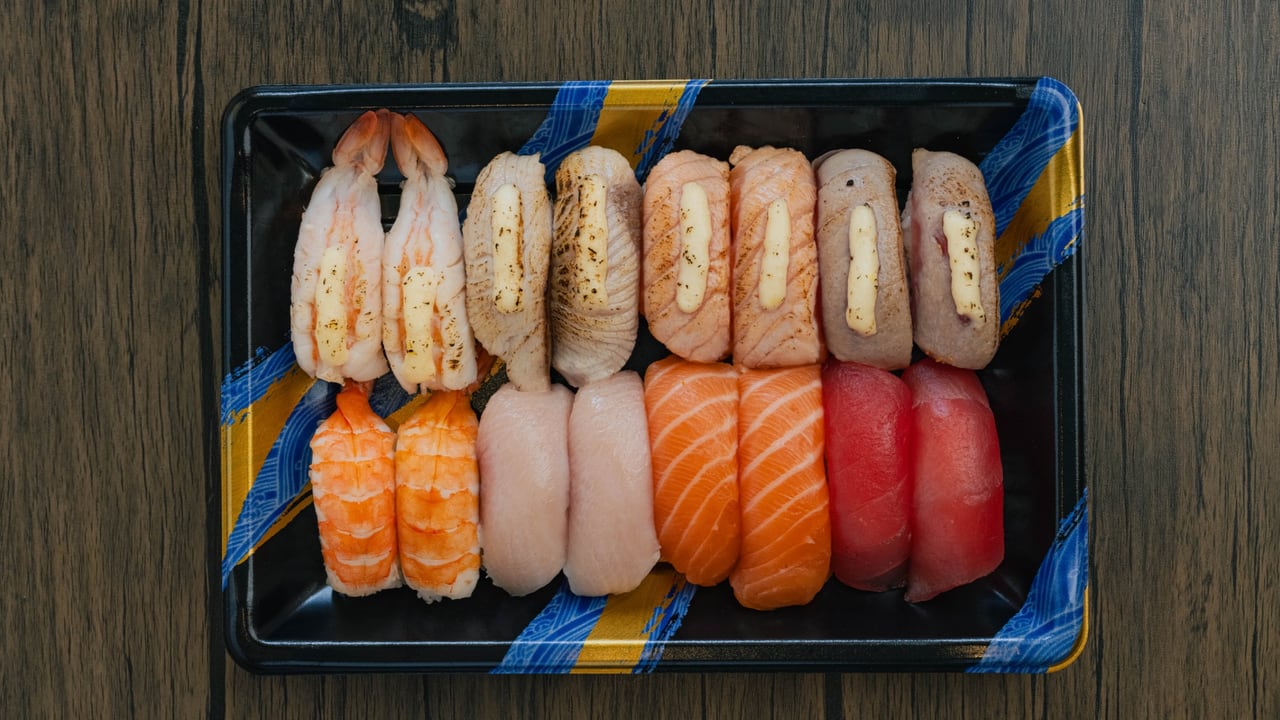
Aburi means torched. It is nigiri where the top of the fish is seared with a blowtorch just before serving, instead of left fully raw. The center stays cold and raw, same as regular nigiri. Only the surface changes.
Here is what that torch actually does, why some fish takes to it better than others, and where to find it on Domo’s menu.
Where the word comes from
Aburi (炙り) comes from the Japanese verb aburu, to sear or roast directly over flame. In sushi kitchens it settled into a specific meaning: a piece of nigiri finished with a handheld torch rather than a stovetop or broiler, so the heat only ever touches the surface. That is the detail that separates aburi from a fully cooked preparation like unagi or teriyaki. It is a finishing technique, not a cooking method that changes the fish all the way through.
What the torch changes
A few seconds of direct flame does three things to a slice of fish. It changes the color of the surface, usually to a light brown or caramelized edge. It renders a thin layer of surface fat, which softens the texture right at the top. And it adds a faint smokiness that plain raw fish does not have. Everything below that top layer is untouched, still raw, still cool.
The result sits in between raw nigiri and a fully cooked piece. You get the char and aroma of grilling with the texture of sashimi underneath it.
Why fattier fish takes to it
Torching rewards fish with fat to render. Salmon and hamachi carry enough fat that a few seconds of heat softens and bastes the surface instead of drying it out, which is why garlic salmon and garlic hamachi are common aburi choices. Leaner cuts, like ahi, have less fat to work with, so the torch is used more briefly, just long enough to color the surface without pushing heat deep enough to firm up the flesh. Get a full comparison of how these three fish differ in ahi vs salmon vs hamachi.
Garlic is the other half of Domo’s aburi preparations. A garlic butter or oil is applied before torching, so the sear caramelizes the garlic into the surface of the fish at the same time it colors the flesh.
The kabayaki detail worth knowing
Domo finishes its aburi, torched items with kabayaki sauce, the same sweet-savory glaze used on unagi. All of Domo’s spicy items get it too. If you want to taste the seared fish and garlic without the sauce, say so when you order. It can be left off.
Where aburi shows up on Domo’s menu
Aburi is not one dish, it is a technique that shows up across several formats:
- Kahala Aburi Set ($36.95): two pieces each of fresh salmon, fresh garlic salmon, fresh local ahi, fresh garlic ahi, hamachi, garlic hamachi, ebi and garlic ebi nigiri, raw and torched versions side by side.
- Garlic Set ($16.95): two pieces each of fresh garlic salmon, garlic ebi, fresh garlic ahi and garlic hamachi, a compact way to try the torch across four fish.
- Karai & Ninniku Platter ($79.95): 16 pieces of spicy ahi bombs alongside 8 pieces of aburi-style seared garlic ahi and 8 pieces of aburi-style seared garlic salmon nigiri.
- Aburi Lover’s Platter ($68.95, 32 pieces): 8 pieces of spicy ahi, 12 pieces of torched garlic ahi and 12 pieces of torched garlic salmon.
- Kazoku Sushi Platter ($76.95, 40 pieces): a mix of fresh and torched garlic ahi and salmon nigiri plus 8 pieces of California roll.
- Volcano & Aburi Platter ($75.95): aburi-style torched garlic ahi, garlic salmon and garlic shrimp alongside the Volcano Roll.
The torch also reaches beyond nigiri. The Seared Salmon poke bowl is garlic mayo salmon finished aburi-style, and the Seared Scallop bowl does the same with scallops for a light, smoky finish. Both live on the poke menu.
How to try it
If you have never had aburi, the sampler sets are the easiest entry point because raw and torched nigiri sit on the same tray, so you can taste the difference piece by piece. If you already know you like it, the platters weighted toward garlic ahi and garlic salmon are the better order.
One thing worth remembering if you are ordering for a group: because the center of aburi nigiri stays raw, it does not count as a cooked option for guests who are avoiding raw fish. Point those guests toward fully cooked items instead. For that side of the planning, see how to order sushi when some guests do not eat raw fish.
Order it torched
Every aburi item above is on Domo’s sushi menu and ready for pickup through ChowNow. Start your order, and mention at checkout if you want the kabayaki sauce left off.
More questions
Is aburi sushi cooked?
Only on the surface. A blowtorch sears the top of the fish in seconds, enough to change color, render surface fat and add a light char. The center stays raw and cool, the same as any other nigiri.
Does aburi always come with sauce?
At Domo, yes. Torched items and all spicy items are finished with kabayaki sauce. If you would rather taste the fish without it, ask for it left off when you order.
Which fish does Domo torch?
Garlic salmon, garlic ahi, garlic hamachi and garlic ebi all appear in aburi-style preparations across the sampler sets and platters. Domo also sears scallops and salmon in some poke bowls.
What this looks like at Domo
Every item below is on the current menu with its published price. See the full menu.
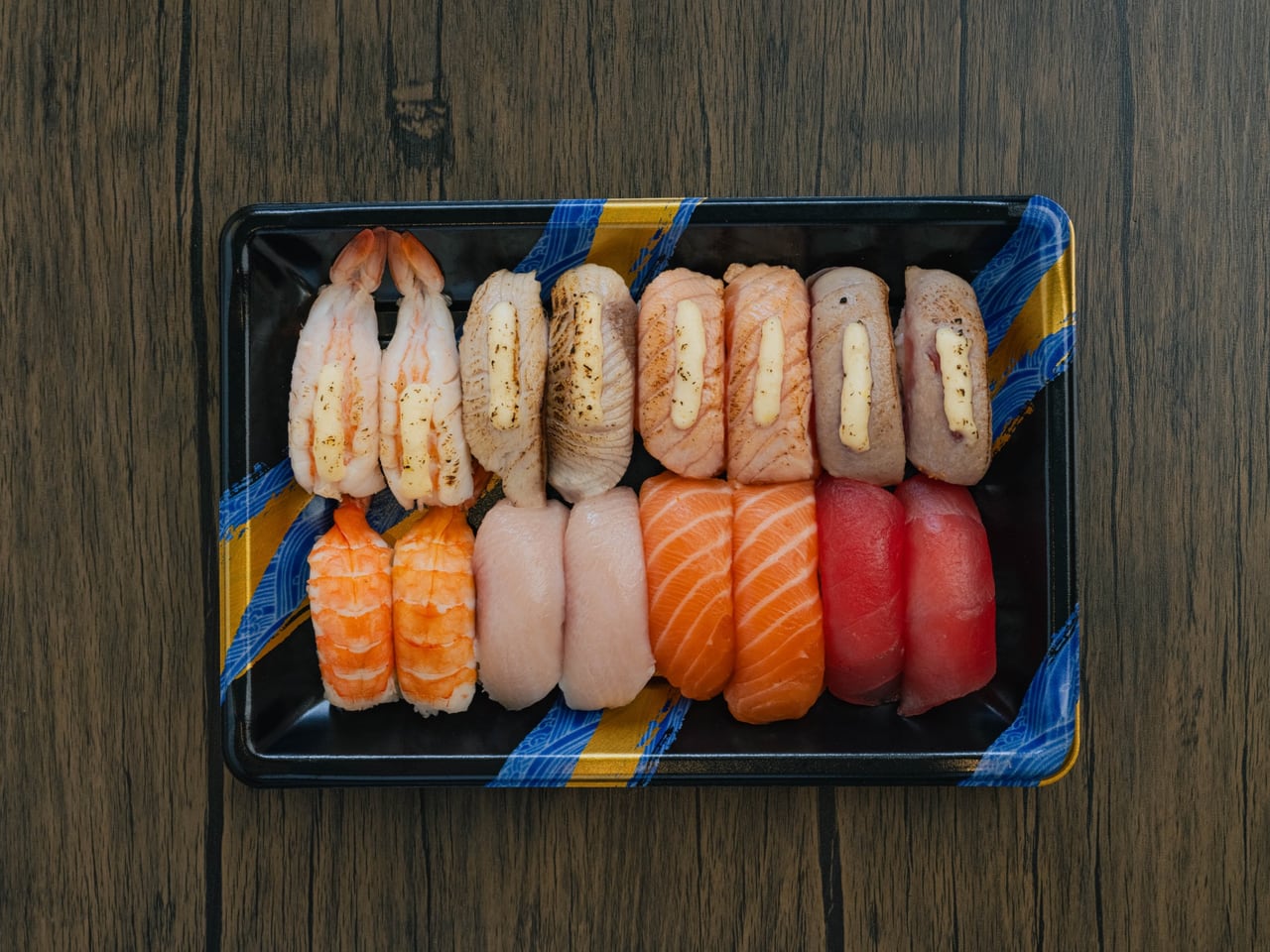
Menu number #13Kahala Aburi Set
Salmon, ahi, hamachi and ebi, each served plain and again with garlic. Sixteen pieces.
$36.95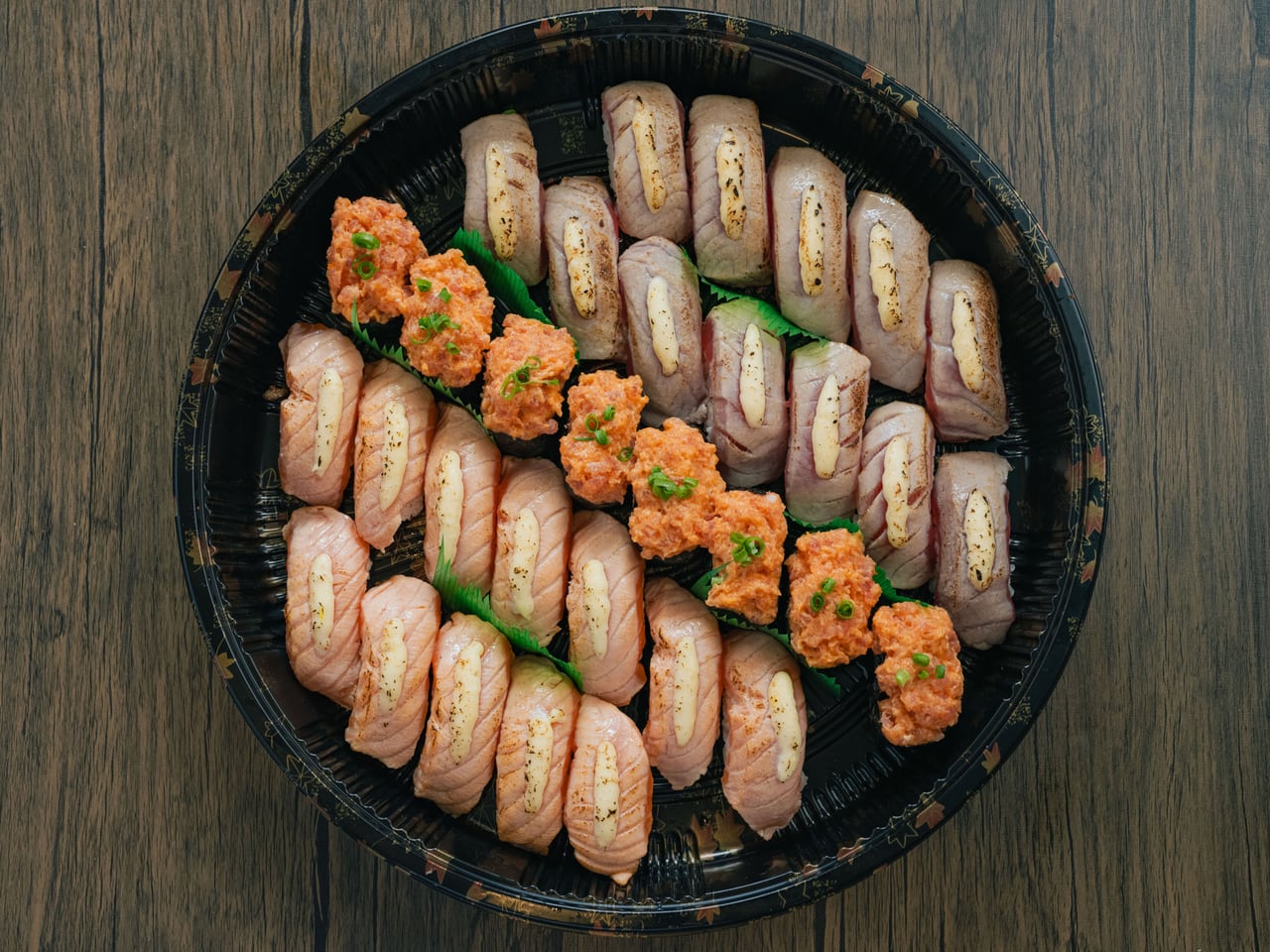
Menu number #9Aburi Lover's Platter
Thirty two torched pieces: garlic ahi, garlic salmon and local spicy ahi sushi.
$68.95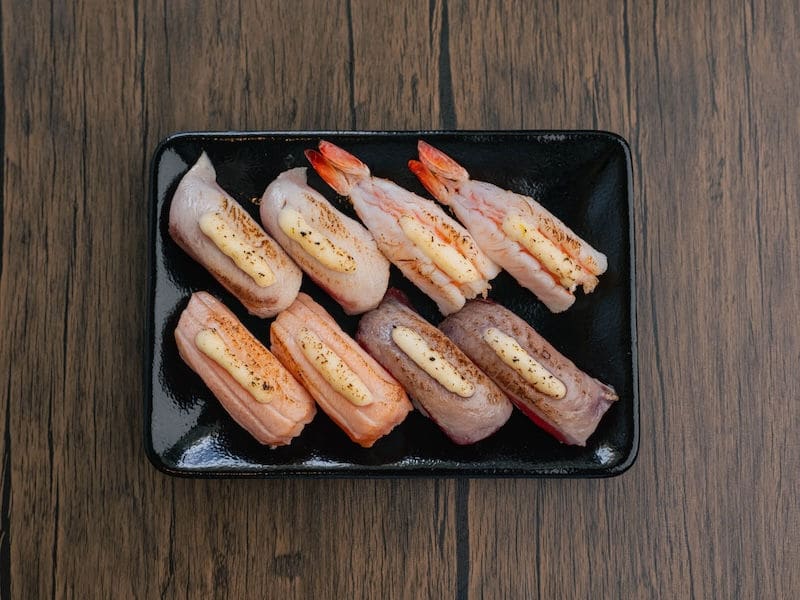
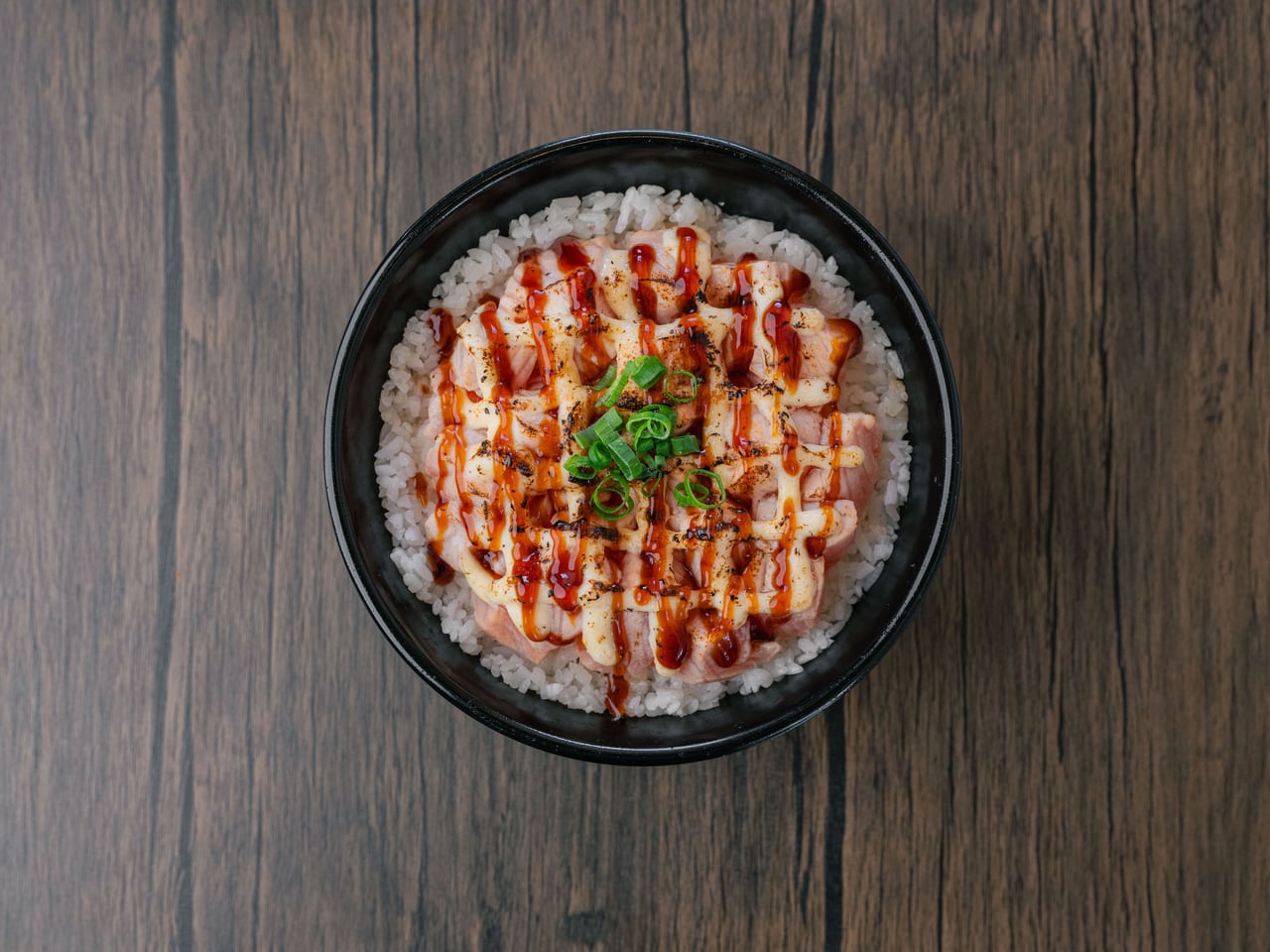
What this looks like
Domo's own photography. More on Inside Domo
Torched to order
Aburi nigiri from the Kahala Aburi Set. The top is seared with a torch before it reaches you, then finished with kabayaki sauce.
Related guides
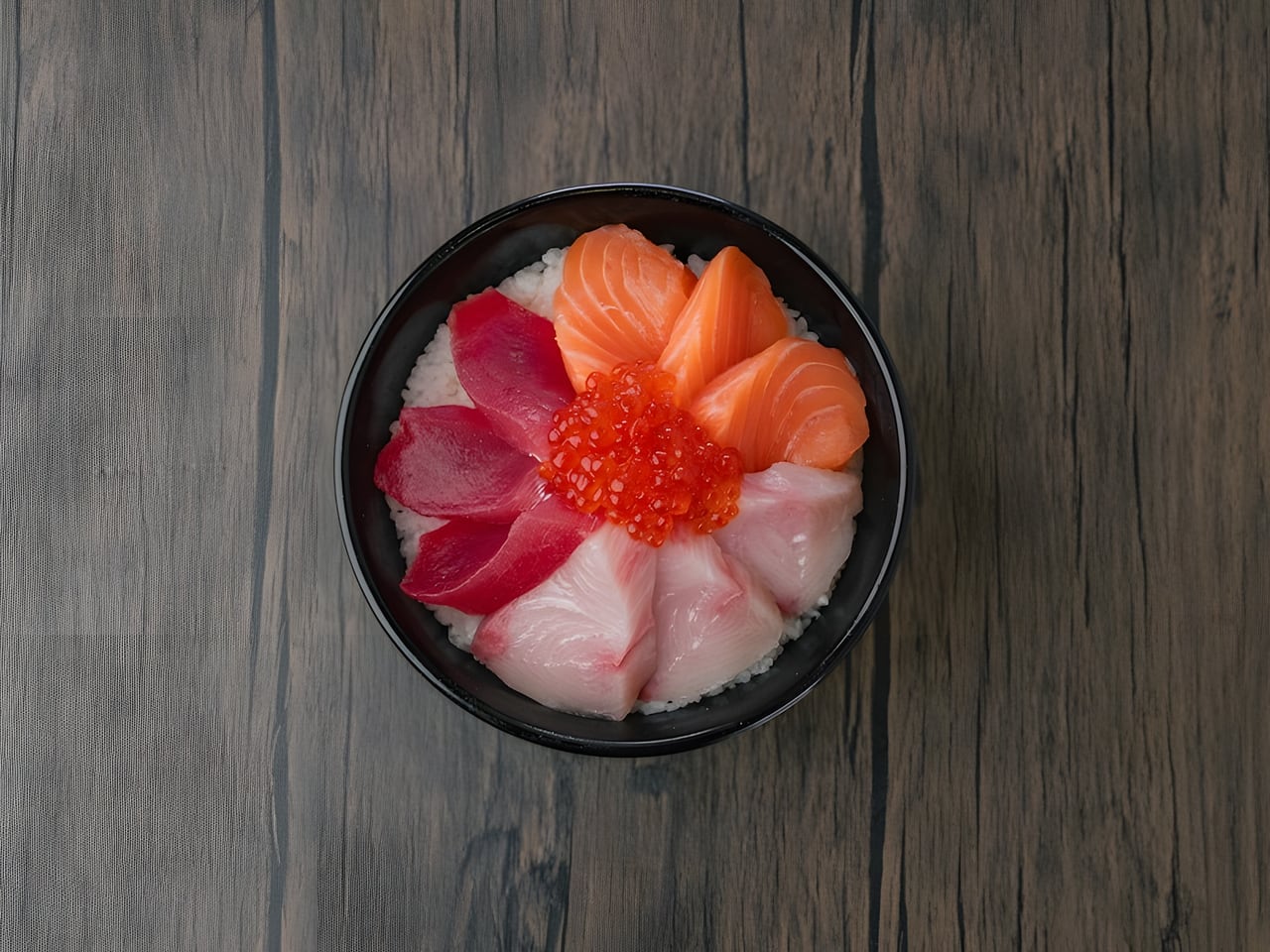
Sushi vs Sashimi: What's the Difference?
The rice is the whole distinction. A plain-language guide to nigiri, sashimi, maki, donburi and poke, and which Domo items land in each category.
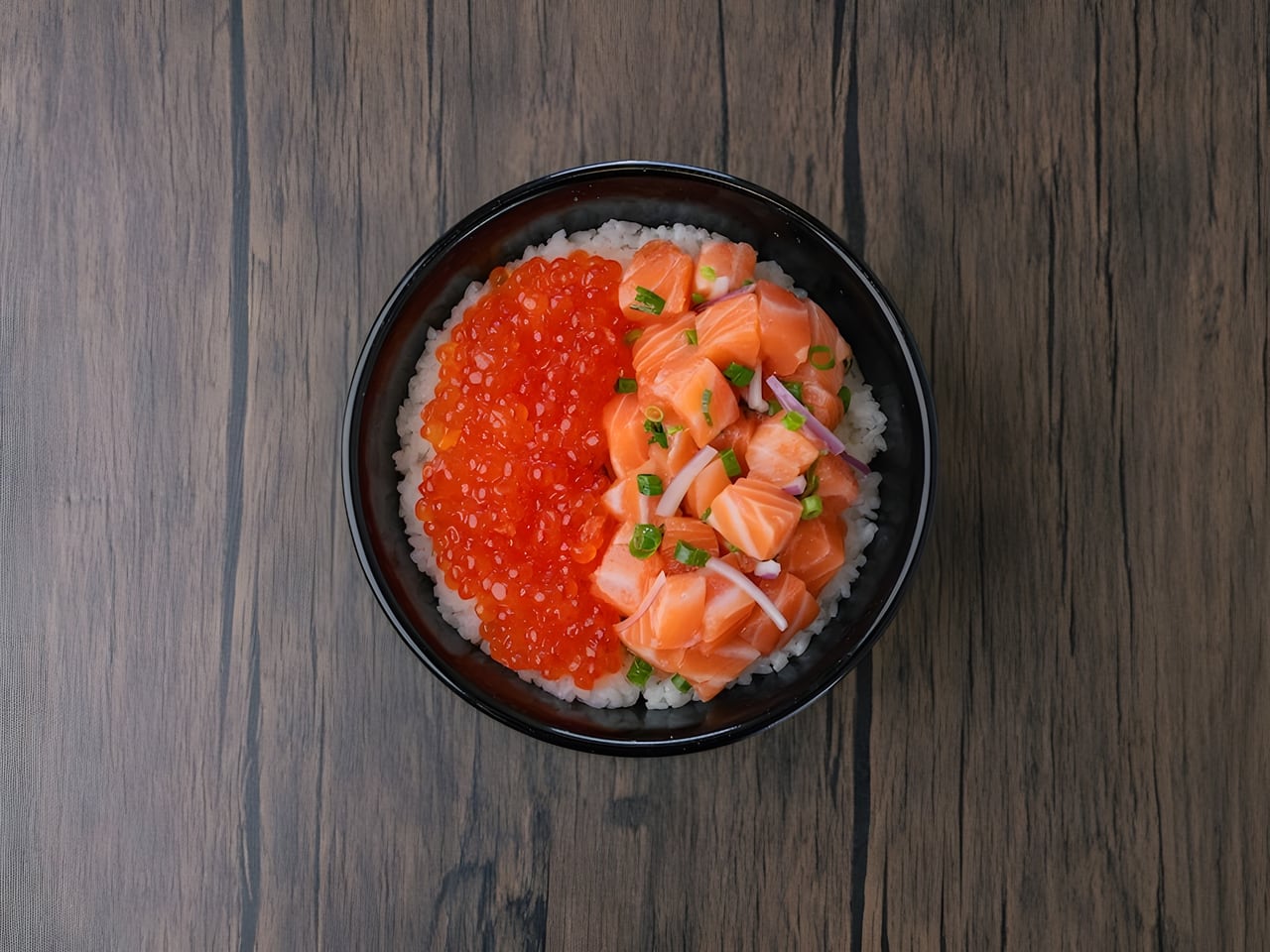
Ahi, Salmon and Hamachi: How to Choose
The three fish that carry Domo's menu, compared on texture, fat and flavor, plus what each one suits best raw, seared and in poke.
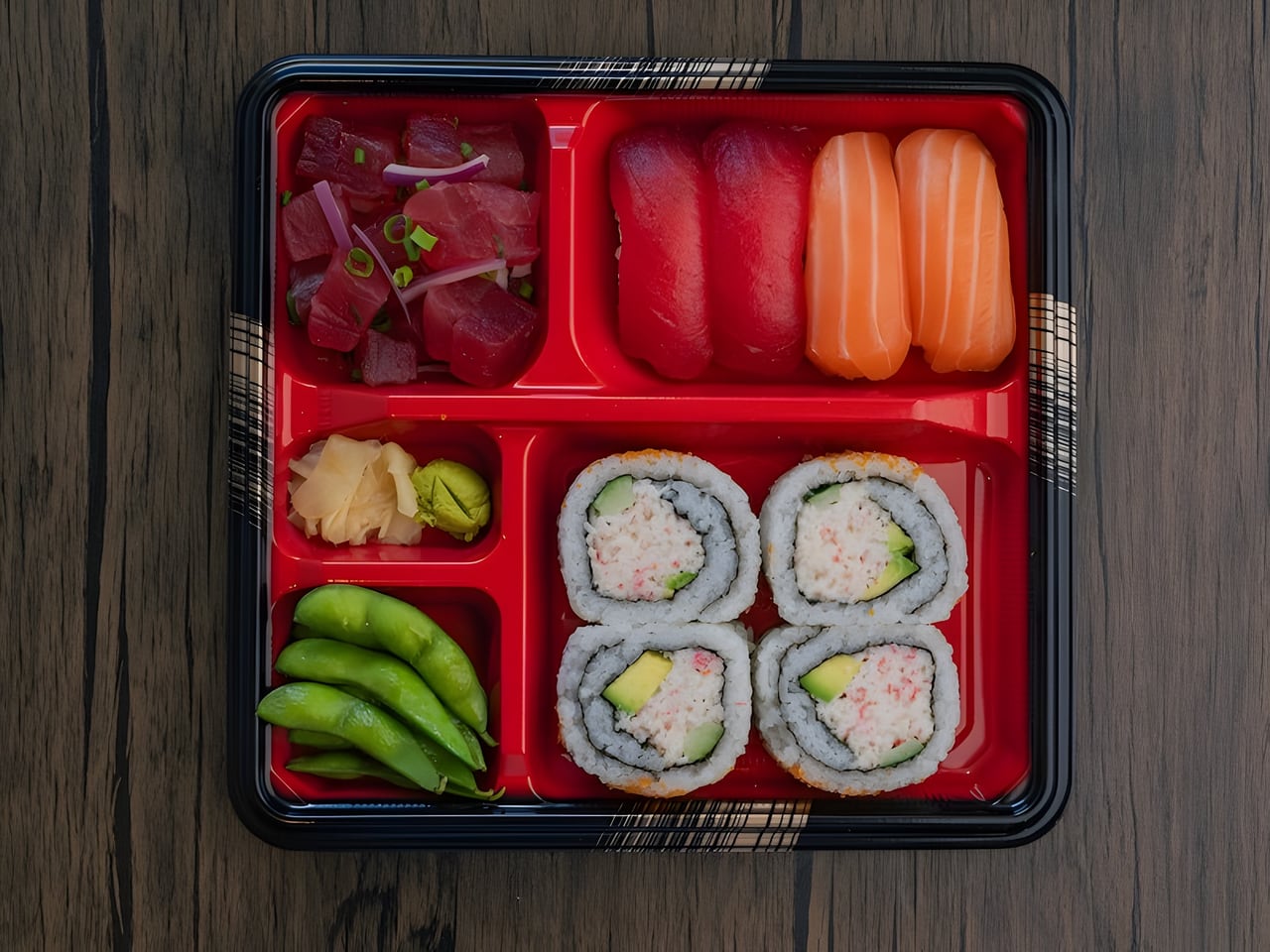
What to Order on Your First Visit to Domo
A confident walk through the menu for someone who has never ordered from Domo, sized for one person, two people, a group, and anyone who skips raw fish.